

Introduction
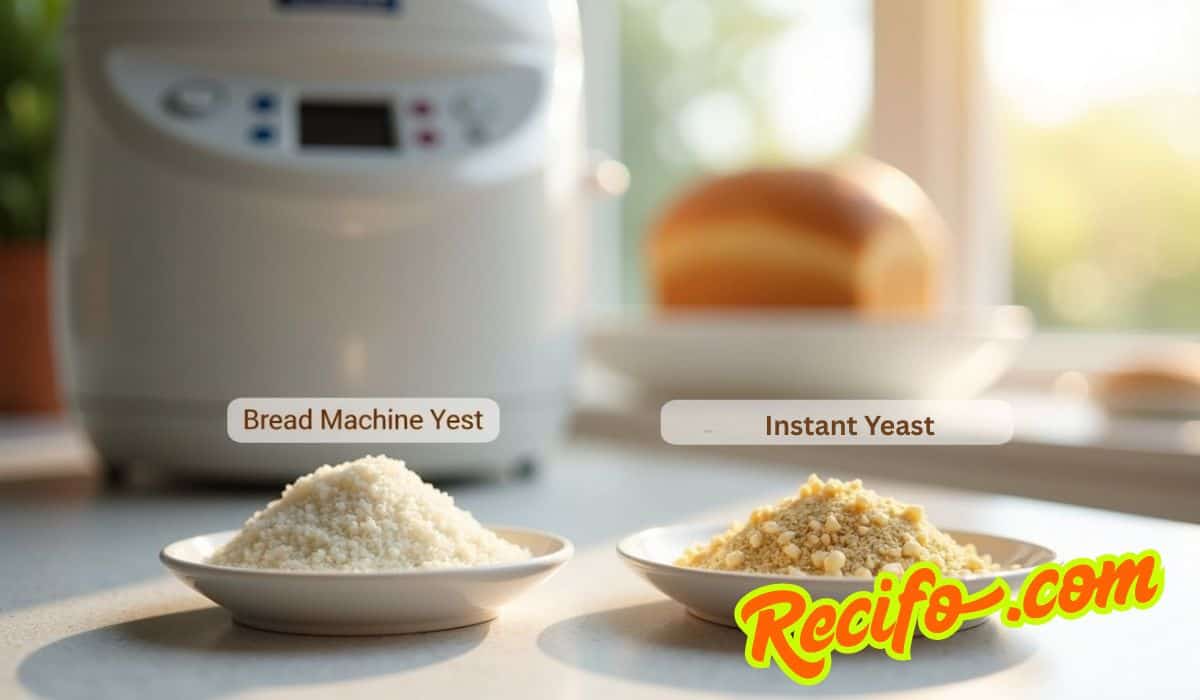
When you’re ready to make homemade bread, one unexpected source of confusion jumps out: the yeast. You’ll see labels like bread machine yeast, instant yeast, rapid-rise yeast, active-dry yeast. Which one should you use? Does it really matter which you pick?
In this article we’re going deep. We’ll compare what “bread machine yeast” and “instant yeast” actually are, explore how they behave (and misbehave), look at how to substitute one for the other, share practical tips.
Top pick
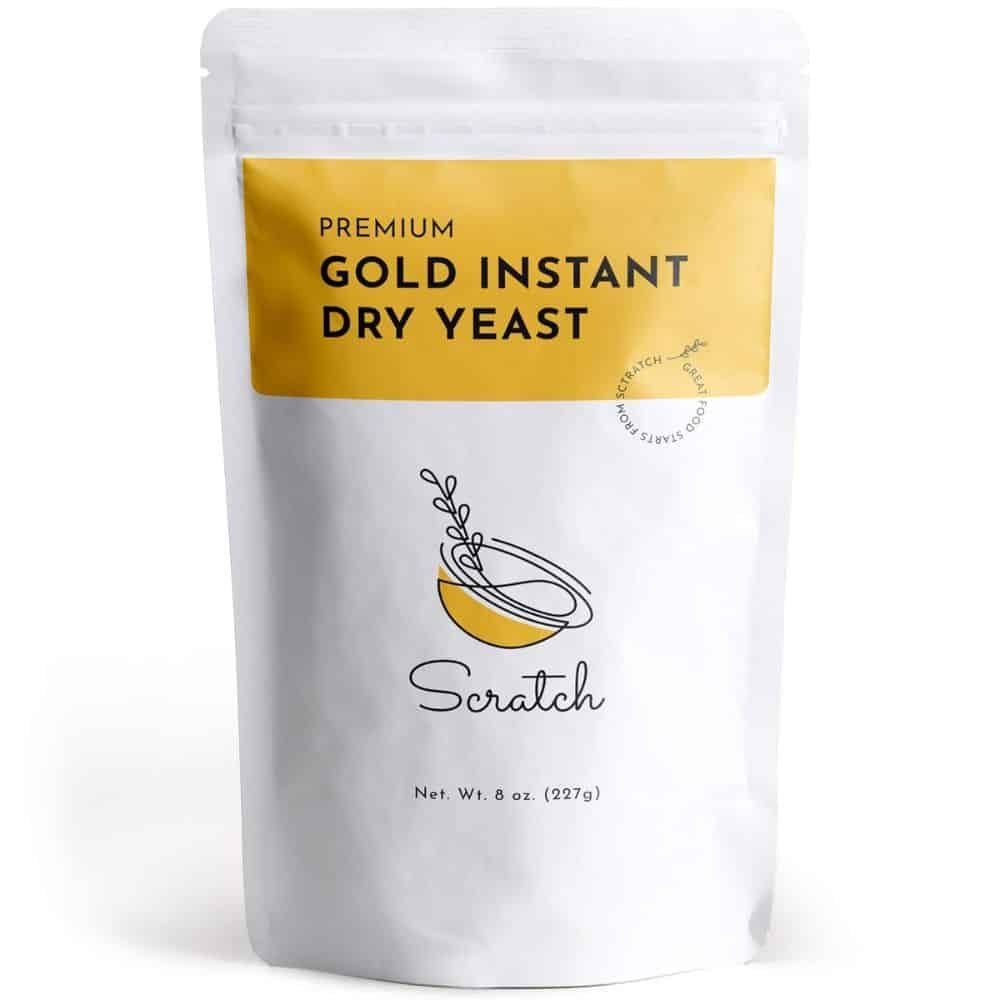
Scratch Gold Yeast
Editor’s choice
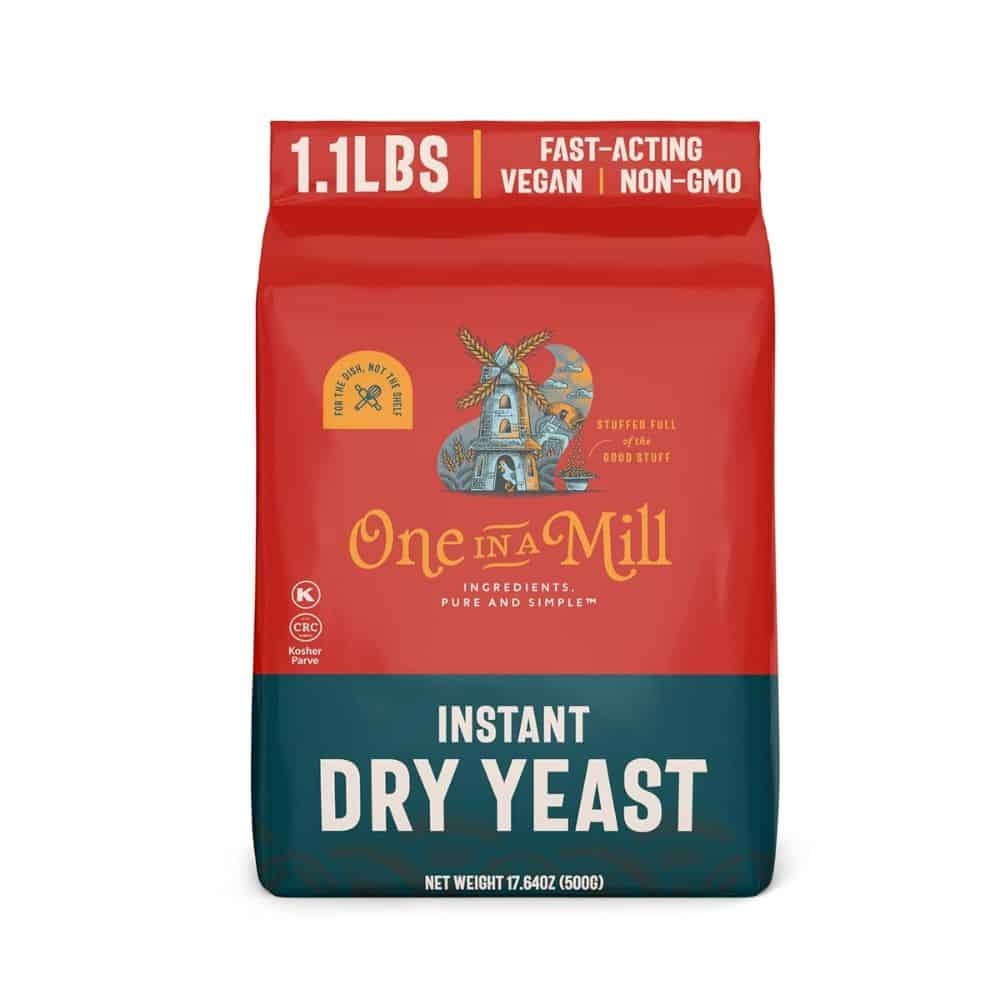
One in a Mill Instant Dry Yeast
Understanding Yeast Types
What is Yeast?
At its simplest, yeast is a living organism (commonly Saccharomyces cerevisiae in bread baking) that eats simple sugars in dough, releases carbon dioxide and alcohol as by-products, and creates the bubbles that cause dough to rise.
Yeast performance depends on factors like granule size, moisture content, how it’s processed and stored, how much sugar/salt the dough has, and the temperature and humidity of the environment.
Bread Machine Yeast
- “Bread machine yeast” is a term often used for yeast marketed specifically for use in bread machines.
- Some sources say it is a form of instant-yeast specially formulated for bread machines.
- According to one site: it has finer granules, higher moisture content in some cases, and is designed to work with bread machine cycles.
- It is intended to be added directly to the dry ingredients (in many bread machines) without needing a separate “proofing” or “activation” step.
Instant Yeast
- “Instant yeast” goes by names like “quick-rise”, “fast-acting”, or sometimes “bread machine yeast” (depending on marketing).
- It has smaller granules than active-dry yeast, dissolves quickly into dough, and in many cases does not require proofing.
- It is versatile: usable in traditional oven baking, bread machines, and generally more forgiving in mixing.
- It tends to have a longer shelf-life and better stability if stored properly.
How Many Yeast Types?
Though you’ll see many names on the shelf, the world of baker’s yeast for home use often boils down to two major types: instant yeast and active dry yeast (the older kind requiring proofing). And “bread machine yeast” often falls under the instant category (or very near it).
Comparing Bread Machine Yeast and Instant Yeast
Here we explore the key attributes side-by-side to help you scribble out the differences (and similarities).
| Attribute | Bread Machine Yeast | Instant Yeast |
|---|---|---|
| Granule size / texture | Often marketed as fine granules, formulated for machine environment. | Also fine granules, perhaps even finer, optimized for fast absorption. |
| Need to proof? (i.e., dissolve in warm water first) | Generally marketed without proofing requirement (though traditional bread machine manuals may still show proofing). | Usually no proofing needed; added directly to dry ingredients. |
| Rise time / performance in machine vs oven | Designed to align with bread machine cycles (knead-rise-bake). Could be optimized for rapid cycles. | Equally usable in machines or traditional ovens; versatile rising time depending on recipe. |
| Shelf life & stability | Some sources say shorter shelf life compared to standard instant yeast. | Typically longer shelf life, more stable in storage if kept airtight, cool. |
| Substitution flexibility | May work best in bread machines; less tested outside that context. | Very flexible; can cover many types of yeast-using recipes. |
| Cost & packaging | Sometimes sold in smaller quantities or special packaging for machines. | Often sold in larger packages since home bakers and semi-pros use it broadly. |
Key takeaway: Despite the different labels, there is a strong case that bread machine yeast and instant yeast are very similar, and depending on brand/manufacturer they may be nearly the same product under different names. Many bakers treat them as interchangeable with minor adjustments.
Substituting One for the Other
Can you use bread machine yeast when the recipe calls for instant yeast?
Yes — in many cases you can. Because bread machine yeast is effectively a form of instant yeast (or very close), it often works. But you should check the recipe and machine cycle, because rise times and ingredient order might differ.
Can you use instant yeast when the recipe has bread machine yeast?
Yes — and you might find you can slightly reduce the yield or tweak the timing. Since instant yeast might be ‘stronger’ or faster in performance, adjust accordingly.
Conversion and adjustment tips
- If your recipe calls for bread machine yeast but you only have instant yeast, use it at the same amount. Then monitor the rise: you may need to shorten the rise time or reduce the yeast amount by ~ 10-25% in very fast cycles.
- If your recipe calls for instant yeast and you have “bread machine yeast”, you can use it 1:1 but be ready for possibly slightly longer rise or less vigorous performance.
- Always check the machine’s manual: some bread machines pre-heat liquid or have specific instructions about when to add yeast. For example, many models require adding liquid first, then dry ingredients, then yeast last in a “well” of flour — to keep yeast away from salt until mixing begins.
Potential impact on the bread’s texture or flavour
- If yeast rises too fast, you might get less flavour development (because longer slow rises often build more complex flavour).
- If yeast is slower than expected, the dough may under-rise or have denser texture.
- Using a different type of yeast but not adjusting the timing/conditions may lead to inconsistent results or loaf collapse.
- In bread machines especially, cycles are timed—so a mismatched yeast may finish the cycle without full rise if its performance is slower.
If you’re still unsure about how to handle yeast substitutions, it’s always worth investing in a Digital Kitchen Thermometer to monitor your dough’s temperature for more consistent results.
Practical Tips for Home Bakers
1. Choosing the Right Yeast for Your Recipe
Consider the following factors when selecting yeast:
- Baking method: Are you using a bread machine, or an oven? If using a bread machine, bread-machine-specific yeast may align well. But if you also bake in the oven frequently, a general-purpose instant yeast may be more flexible.
- Rise time / schedule: If you need a quick loaf (say you start in the morning), a fast-acting yeast (instant/bread-machine) helps. If you have hours to spare and want flavour, you might choose a slower-rise approach (perhaps even active-dry yeast with longer rise).
- Ingredient profile: High sugar, high fat doughs stress yeast more. Some yeasts are formulated for these “difficult” doughs (often instant types).
- Storage and usage frequency: If you bake often, a larger pack of instant yeast might make sense. If you bake rarely with a dedicated machine, a small packet of bread machine yeast may suffice.
- Brand and machine recommendation: Some bread machine manufacturers recommend a brand/type of yeast for best results in their specific machine.
2. Proper Storage Practices
- Store yeast in a cool, dry place, ideally an airtight container once opened.
- Refrigeration or freezing after opening can prolong viability (especially for instant yeast).
- Check expiration dates. Using old or dead yeast can result in poor rise or dense loaves.
- When in doubt, proof a small amount (see next section) to test viability.
3. How to Test Yeast (Proofing)
Even if you’re using “instant” or bread-machine yeast that claims no proofing, if the packet is old or you suspect it may be weakened, test it:
- Mix ~ ½ teaspoon of yeast with ~ ¼ cup of warm water (100-110 °F / 38-43 °C) and a pinch of sugar.
- Wait ~5–10 minutes. If the mixture bubbles/foams, the yeast is alive and active. If nothing happens, assume the yeast is dead and replace.
- Then proceed with your recipe as normal.
4. Troubleshooting Common Issues
- Dough doesn’t rise: Could be dead yeast, too much salt contacting yeast directly, liquid too hot (which kills yeast), or cold environment.
- Bread is dense: Perhaps the rise time was too short, dough under-proved, or the yeast amount/integration was off.
- Bread tastes “yeasty” or has off-flavour: Maybe too much yeast, too fast rising leads to less flavour development, or dough sat too long before baking.
- Poor crust/baking cycle in a bread machine: If rise is weak or the loaf collapses mid-cycle, check yeast type/amount and machine settings (some machines require yeast be added last).
FAQ
Can I use bread machine yeast in traditional oven-baked bread recipes?
Yes — in many cases. If your recipe calls for instant yeast, you can drop in bread machine yeast and monitor the rise. You may need to allow a little extra time for rising if the yeast is slightly slower, but it will generally work.
Is instant yeast the same as active-dry yeast?
No — not exactly. Active-dry yeast has larger granules, typically needs proofing (dissolving in warm water) before use, and often requires a longer rise. Instant yeast has finer granules, can be mixed directly with dry ingredients, and generally rises faster.
How do I convert between active-dry, instant, and bread machine yeast?
- A common rule: 1 teaspoon instant yeast ≈ 1¼ teaspoons active-dry yeast.
- If substituting bread machine yeast for instant, use it 1:1 but watch rise times.
- Always adjust rise times and proofing steps depending on yeast type and recipe instruction.
Can I freeze yeast to extend its shelf life?
Yes. Once opened, storing yeast in the freezer (or at least refrigerated) in an airtight container helps maintain its potency. Many bakers freeze jars of yeast and scoop out what they need. But always allow yeast to come to room temperature before mixing in dough, to avoid shocking the yeast.
What happens if I add too much yeast?
More yeast does not automatically equal a better loaf. Too much yeast can cause:
- Over-rapid rise leading to weaker gluten structure (loaf may collapse).
- Reduced flavour development (fast rise means less time for flavour building).
- Off-flavour due to excessive by-products from yeast activity.
Thus, following the recipe amount (or manufacturer recommendation) is wise.
Does the type of yeast affect flavour of the bread?
In most standard home-baked bread applications, the flavour difference between fine instant and bread machine yeast is minimal. What does affect flavour more are: rise time (slower generally gives more flavour), fermentation conditions, dough ingredients, and how long you let the dough rest. One article notes that while instant may rise faster, the flavour difference is “slight”.
Conclusion
Choosing between “bread machine yeast” and “instant yeast” doesn’t need to be intimidating. The two are very similar, and in many cases interchangeable — the biggest differences lie in how they are marketed, their packaging, and sometimes minor performance tweaks in specialized situations.
What matters most is:
- Your technique (ingredient order, temperature, rise time).
- Storing your yeast properly so it remains potent.
- Understanding your machine or recipe’s requirements.
- Being willing to adjust if you substitute one form of yeast for another.
If you bake with a bread machine regularly and prefer one-step convenience, go ahead and buy the “bread machine yeast” packet. If you bake a range of breads (machine + oven) and want more flexibility and better value, pick a good instant yeast and stick with it. With care and practice, both will produce beautiful home-baked loaves.
Happy baking!
Leave a Reply