
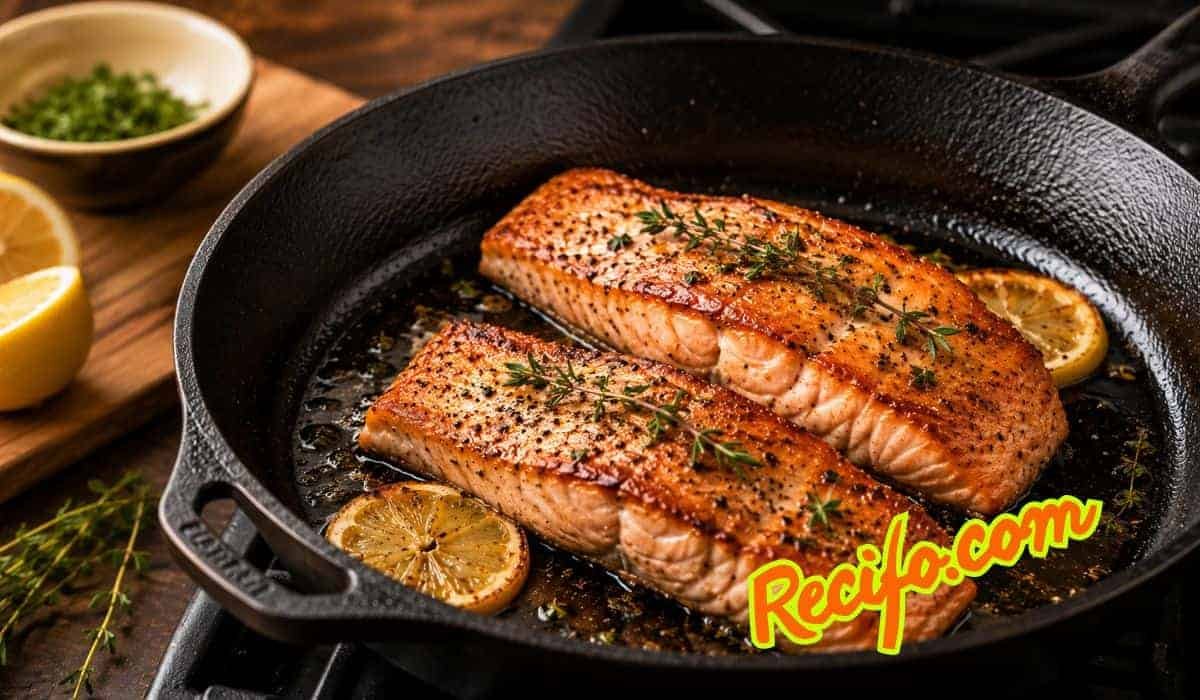
Cooking salmon in a skillet is one of the easiest and most flavorful ways to prepare this healthy fish. If you want crispy skin, juicy flesh, and simple cleanup, skillet cooking is the right choice. Here’s everything you need to know to make perfect salmon on your stovetop—even if you’re new to cooking fish.
Table of Contents
Why Skillet Cooking Works For Salmon
A hot skillet gives salmon a crisp, golden crust while keeping the inside moist. Unlike baking or grilling, you can watch the fish and control the doneness. Salmon is high in protein, omega-3 fatty acids, and vitamin D. Pan-searing locks in these nutrients while adding a rich flavor.
Here’s how skillet cooking compares with other popular methods:
| Cooking Method | Texture | Time Needed | Skill Level |
|---|---|---|---|
| Skillet (Pan-sear) | Crispy outside, juicy inside | 8–12 minutes | Beginner |
| Baking | Even, tender | 15–20 minutes | Beginner |
| Grilling | Smoky, firm | 10–14 minutes | Intermediate |
Ingredients And Tools
To skillet cook salmon, you need just a few basic items. Using the right ingredients and tools makes a difference in the final result.
Ingredients:
- 2 salmon fillets (6 oz each, skin-on)
- 1 tablespoon olive oil or avocado oil
- Salt, to taste
- Black pepper, to taste
- Optional: Lemon wedges, fresh herbs (like dill or parsley)
Tools:
- Heavy skillet (cast iron or stainless steel works best)
- Thin spatula (fish spatula preferred)
- Paper towels
Buying salmon with the skin on helps hold the fillet together and gives a crispy finish. Wild-caught salmon is firmer and has a stronger flavor, while farmed salmon is milder and fattier.
Prepping The Salmon
Preparation is key for even cooking. Remove salmon from the fridge 15 minutes before cooking to reach room temperature. This helps the fish cook evenly.
- Pat the salmon fillets dry with paper towels. Moisture prevents crisp skin.
- Sprinkle both sides with salt and pepper. Season just before cooking to keep the flesh firm.
- Optional: If you want extra flavor, rub a little olive oil or minced garlic on the flesh side.
Cooking Salmon In A Skillet
Follow these steps for reliable results every time.
- Heat your skillet over medium-high heat for 2–3 minutes. The pan should be hot but not smoking.
- Add oil. Swirl to coat the bottom evenly.
- Place salmon fillets in the skillet, skin-side down. Press gently for a few seconds to prevent curling.
- Cook without moving for 5–6 minutes. The skin should turn crisp and release easily from the pan.
- Flip the fillets carefully. Cook the other side for 2–4 minutes, depending on thickness and your preferred doneness.
For most people, salmon is best when the center is slightly translucent. The USDA recommends an internal temperature of 145°F (63°C), but many chefs prefer stopping at 125–130°F for a moist texture.
Cooking Time Guide
Salmon thickness affects cooking time. Here’s a quick guide:
| Thickness | Skin-Side Down | Flesh-Side Down | Total Time |
|---|---|---|---|
| 1/2 inch | 3–4 min | 1–2 min | 4–6 min |
| 1 inch | 5–6 min | 2–3 min | 7–9 min |
| 1.5 inches | 6–7 min | 3–4 min | 9–11 min |

Tips For The Best Skillet Salmon
- Use a heavy skillet for even heat. Thin pans may burn the fish.
- Avoid overcrowding. Cook two fillets at a time for best results.
- Don’t move the salmon early. Letting it cook undisturbed gives crispier skin.
- If the skin sticks, give it a minute more. It will release when ready.
- After cooking, rest the salmon for 2 minutes to let juices settle.
Non-obvious insight: Room temperature salmon not only cooks evenly but also reduces albumin (white protein that can ooze out). Also, wild salmon cooks faster and can dry out more easily, so keep a close eye on it.
Serving And Pairing Ideas
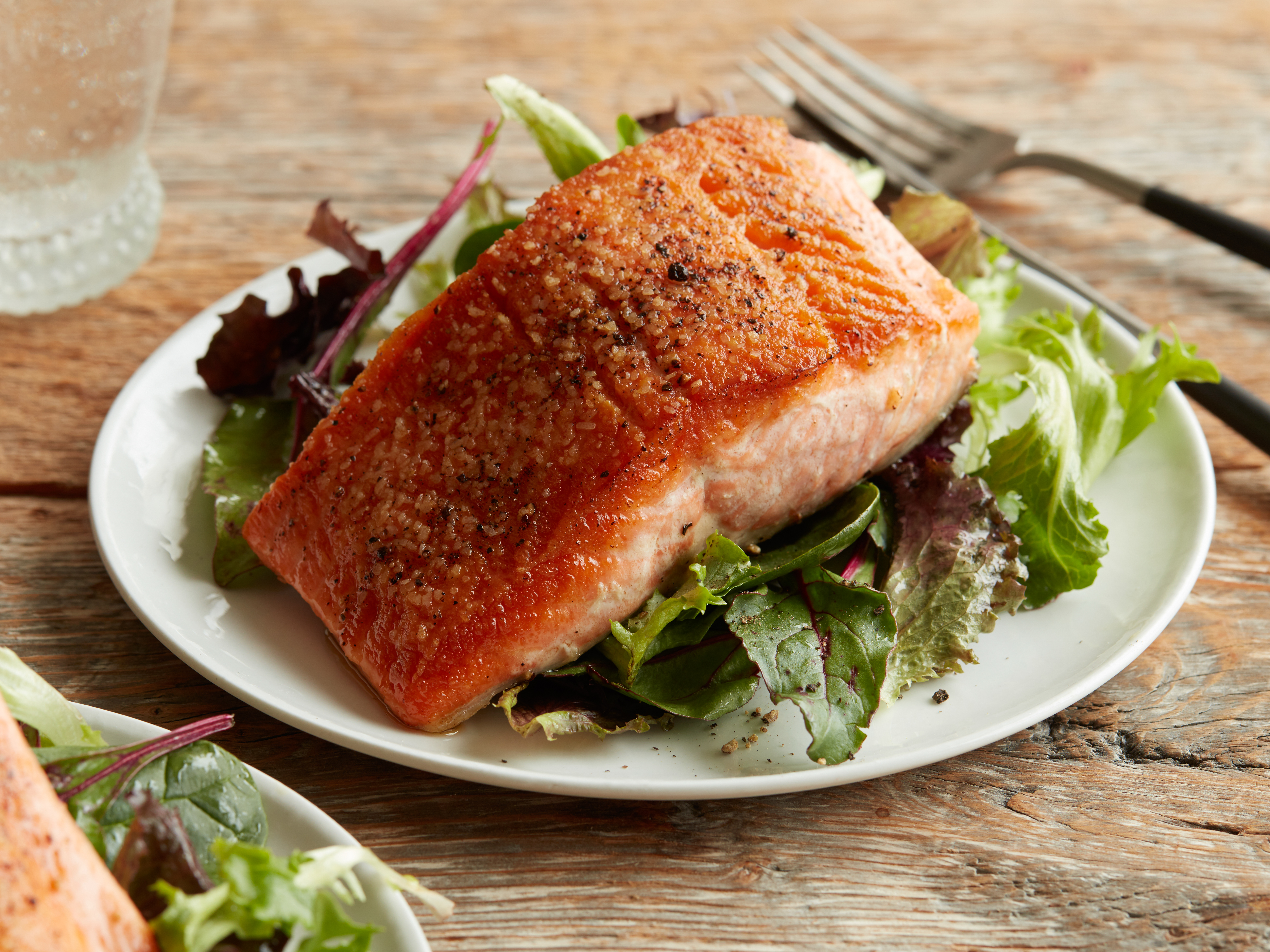
Skillet-cooked salmon is versatile. Serve it with rice, roasted vegetables, or salad. Squeeze a little lemon juice over the top for brightness. Fresh herbs add color and flavor.
Here’s a quick comparison of popular sides for salmon:
| Side Dish | Flavor Profile | Prep Time |
|---|---|---|
| Steamed rice | Mild, neutral | 15 min |
| Roasted asparagus | Earthy, crisp | 20 min |
| Greek salad | Fresh, tangy | 10 min |
Experiment with sauces like a simple yogurt dill dip or honey mustard glaze. Leftover salmon makes a great topping for pasta or sandwiches.
:max_bytes(150000):strip_icc()/SEA-crispy-pan-seared-salmon-fillets-recipe-hero-6059f48d4f314978af13f94db470d0a4.jpg)
Frequently Asked Questions
How Do I Know When Salmon Is Done?
Salmon flakes easily with a fork and turns from translucent to opaque. For juicy salmon, remove it when the center is just barely cooked. An instant-read thermometer is the most reliable tool.
Should I Cook Salmon With The Skin On Or Off?
Cooking with the skin on helps protect the flesh from overcooking and adds a crispy texture. The skin also holds the fillet together. You can remove the skin after cooking if you prefer.
What Oil Is Best For Skillet Salmon?
Choose an oil with a high smoke point like olive oil, avocado oil, or grapeseed oil. Butter can add flavor but may burn at high heat, so use it at the end if you want a buttery taste.
Can I Skillet Cook Frozen Salmon?
It’s best to thaw salmon before skillet cooking for even results. If you must cook from frozen, rinse the fillet under cold water, pat dry, and extend the cooking time. The texture may be less tender.
Last Word
A well-cooked salmon fillet from the skillet is a quick, healthy dinner option that anyone can master. With a few simple steps and attention to detail, you’ll enjoy restaurant-quality salmon at home every time.
Leave a Reply