
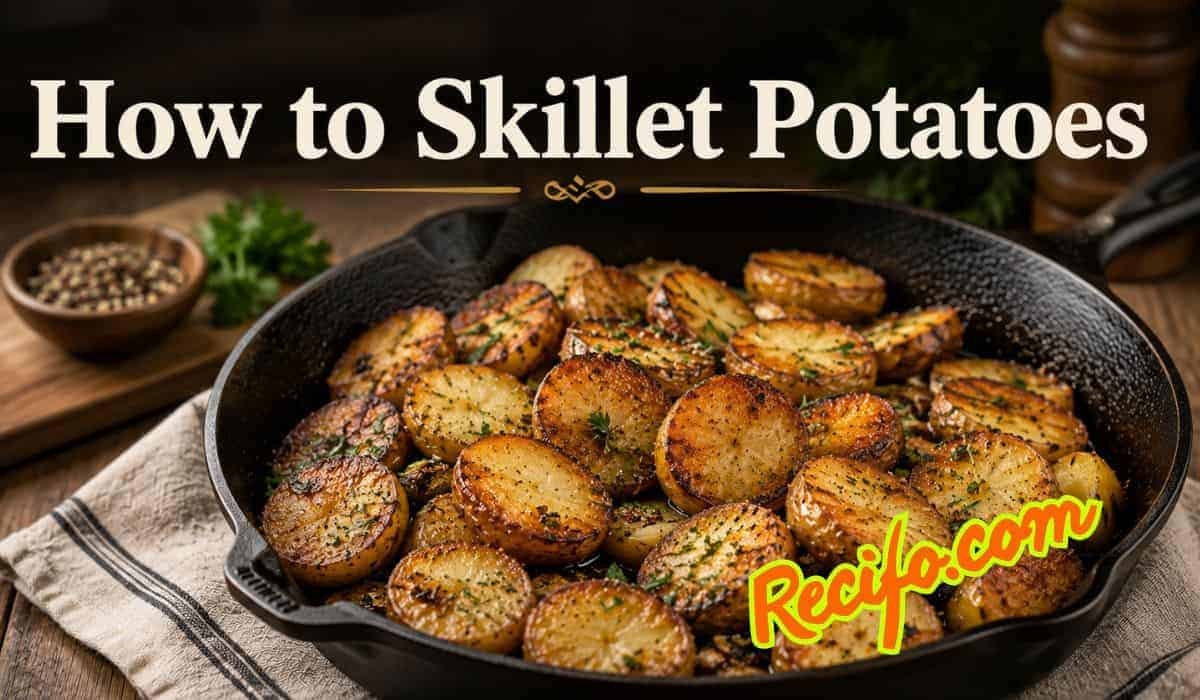
Skillet potatoes are a classic side dish that never goes out of style. They are simple to prepare, require only a few ingredients, and deliver big flavor. When cooked right, they are golden and crispy on the outside, while soft and fluffy inside.
If you’re wondering exactly how to skillet potatoes perfectly, here’s a practical guide that covers every detail—from choosing the right potatoes to serving them hot at the table.
Table of Contents
What Are Skillet Potatoes?
Skillet potatoes are sliced or diced potatoes cooked in a frying pan or skillet with oil or butter. They are often seasoned with salt, pepper, and sometimes herbs or onions. This method is popular because it’s quick, doesn’t require an oven, and works well for breakfast, lunch, or dinner.
Choosing The Best Potatoes
Not all potatoes are equal when it comes to skillet cooking. The type you use makes a big difference in both taste and texture.
| Potato Type | Texture When Cooked | Best For |
|---|---|---|
| Russet | Fluffy, crisp edges | Classic skillet potatoes |
| Yukon Gold | Buttery, holds shape | More creamy texture |
| Red | Waxy, firm | Potatoes that keep shape |
Russet potatoes are excellent for a crisp finish, while Yukon Gold offers a richer, more buttery taste. For potatoes that don’t fall apart, try red potatoes.

Ingredients And Tools
Before you start, gather these items:
- 2 pounds of potatoes (Russet or Yukon Gold work best)
- 2–3 tablespoons of oil (vegetable, canola, or olive oil)
- 1 tablespoon of butter (for flavor)
- 1 medium onion (optional, for sweetness)
- Salt and black pepper to taste
- Fresh or dried herbs (rosemary, thyme, parsley – optional)
- A large skillet (preferably cast iron)
- A spatula or wooden spoon
Preparation And Cooking Method
1. Prep The Potatoes
Wash and peel the potatoes if you prefer. For a rustic feel, leave the skins on. Cut the potatoes into even cubes or thin slices (about 1/4-inch thick). Even pieces cook more uniformly, preventing burnt bits and raw centers.
A helpful tip: soak the cut potatoes in cold water for 10–20 minutes. This removes excess starch, which helps them crisp up better in the skillet. Drain well and pat dry with a clean towel.
2. Heat The Skillet
Place the skillet on medium-high heat. Add the oil and let it warm up. Once the oil shimmers, add the butter. The mix of oil and butter gives a good balance of flavor and prevents burning.
3. Cook The Potatoes
Spread the potatoes in a single layer. Avoid crowding the pan, as this steams the potatoes instead of frying them. If you have a lot, cook in batches.
Let the potatoes sit undisturbed for 4–5 minutes before flipping. This helps build a golden crust. Stirring too soon will prevent browning.
Add chopped onions after the first flip if using. Continue cooking, flipping occasionally, until the potatoes are golden brown and tender inside. This usually takes 15–20 minutes.
4. Season And Finish
Season with salt, pepper, and herbs just before the end of cooking. Adding salt too early can draw out moisture and make the potatoes soggy. Toss everything to coat evenly, taste, and adjust as needed.
Skillet Potatoes Vs. Other Methods
How do skillet potatoes compare with other common cooking methods? Here’s a quick overview.
| Method | Texture | Cooking Time | Notes |
|---|---|---|---|
| Skillet | Crispy outside, soft inside | 15–25 min | Needs more attention |
| Oven Roasted | Crispy, drier | 30–40 min | Easy for big batches |
| Boiled | Soft, less flavor | 10–20 min | Best for mashing |
Skillet potatoes are faster than roasting and have more flavor than boiling. The main challenge is keeping them crispy without burning.
Tips For Better Skillet Potatoes
- Use a heavy skillet. Cast iron holds heat well and helps potatoes brown evenly.
- Don’t rush. Letting the potatoes brown undisturbed is the secret to a crispy crust.
- Avoid overcrowding. Cook in batches if needed, or use a larger pan.
- Dry potatoes before cooking. Moisture is the enemy of crispiness.
- Add aromatics last. Onions, garlic, and herbs can burn if added too early.
Many beginners forget to dry the potatoes or try to cook too many at once. These two mistakes make potatoes soggy or unevenly cooked.
Common Variations
- With peppers: Add diced bell peppers for color and sweetness.
- With bacon: Fry chopped bacon first, then cook potatoes in the bacon fat.
- Spicy: Sprinkle smoked paprika or cayenne for heat.
- Cheesy: Add shredded cheddar during the last 2 minutes and cover until melted.
Each variation brings a different character to the dish, making skillet potatoes versatile for any meal.
Serving And Storing
Serve skillet potatoes hot, straight from the pan. They pair well with eggs, sausages, steak, or as a side to almost any main dish.
If you have leftovers, let them cool before storing in an airtight container in the fridge for up to 3 days. Reheat in a skillet over medium heat for best results. Microwaving works, but the potatoes may lose their crispiness.
Nutrition Facts
Potatoes are a good source of vitamin C, potassium, and fiber. For every cup of skillet potatoes (about 150g), you’ll get approximately:
- Calories: 210
- Carbohydrates: 36g
- Protein: 4g
- Fat: 7g
- Fiber: 3g
If you use less oil or skip the butter, calories and fat will decrease.
Frequently Asked Questions
How Do I Keep Skillet Potatoes From Sticking?
Use enough oil, and make sure the skillet is hot before adding potatoes. Cast iron or nonstick pans work best. Let potatoes form a crust before flipping.
Can I Use Sweet Potatoes?
Yes, sweet potatoes work, but they cook a bit faster and may burn if the heat is too high. Keep an eye on them, and flip gently.
Do I Have To Peel The Potatoes?
No, the skin is full of nutrients and adds texture. Just scrub them well. Peeling is a personal choice.
What Oil Is Best For Skillet Potatoes?
Neutral oils like canola or vegetable oil are best for crispiness. Olive oil adds flavor but may smoke at high heat. Mixing oil and butter gives a good balance.
Can I Make Skillet Potatoes Ahead Of Time?
You can par-cook the potatoes by boiling or microwaving until just tender, then finish them in the skillet before serving. This is helpful for large groups or busy mornings.
Last Word
With the right technique, skillet potatoes can become a favorite at your table. Small adjustments in prep and cooking time can lead to big improvements in flavor and texture.
Leave a Reply