

Cooking chicken in a skillet is a simple and reliable method for juicy, flavorful results. Whether you’re new to the kitchen or just want a quick meal, this technique brings out the best in chicken. All you need is a stovetop, a skillet, and a few basic ingredients.
Here’s how to skillet cook chicken for a meal that’s both tasty and healthy.
Table of Contents
Choosing The Right Chicken Cut
The type of chicken you use matters. Boneless, skinless chicken breasts are the most popular for skillet cooking. They cook fast and are easy to season. Chicken thighs are another good choice; they have more fat, so they stay juicy and have more flavor. Both types work well, but cooking times will be different.
| Cut | Cooking Time (per side) | Texture |
|---|---|---|
| Chicken Breast | 5-7 minutes | Lean, mild |
| Chicken Thigh | 6-8 minutes | Juicy, rich |
For even cooking, use pieces that are about the same size. Thicker pieces may need to be pounded flat or finished in the oven.
Ingredients And Tools
You only need a few items to get started:
- 2 boneless, skinless chicken breasts (about 1 pound)
- 1 tablespoon olive oil or vegetable oil
- 1 teaspoon salt
- ½ teaspoon black pepper
- ½ teaspoon garlic powder (optional)
- ½ teaspoon paprika (optional)
- Skillet (preferably nonstick or cast iron)
- Tongs or spatula
- Meat thermometer
The oil helps the chicken brown and keeps it from sticking. Spices add extra flavor, but salt and pepper are enough for a classic taste.
Preparing The Chicken
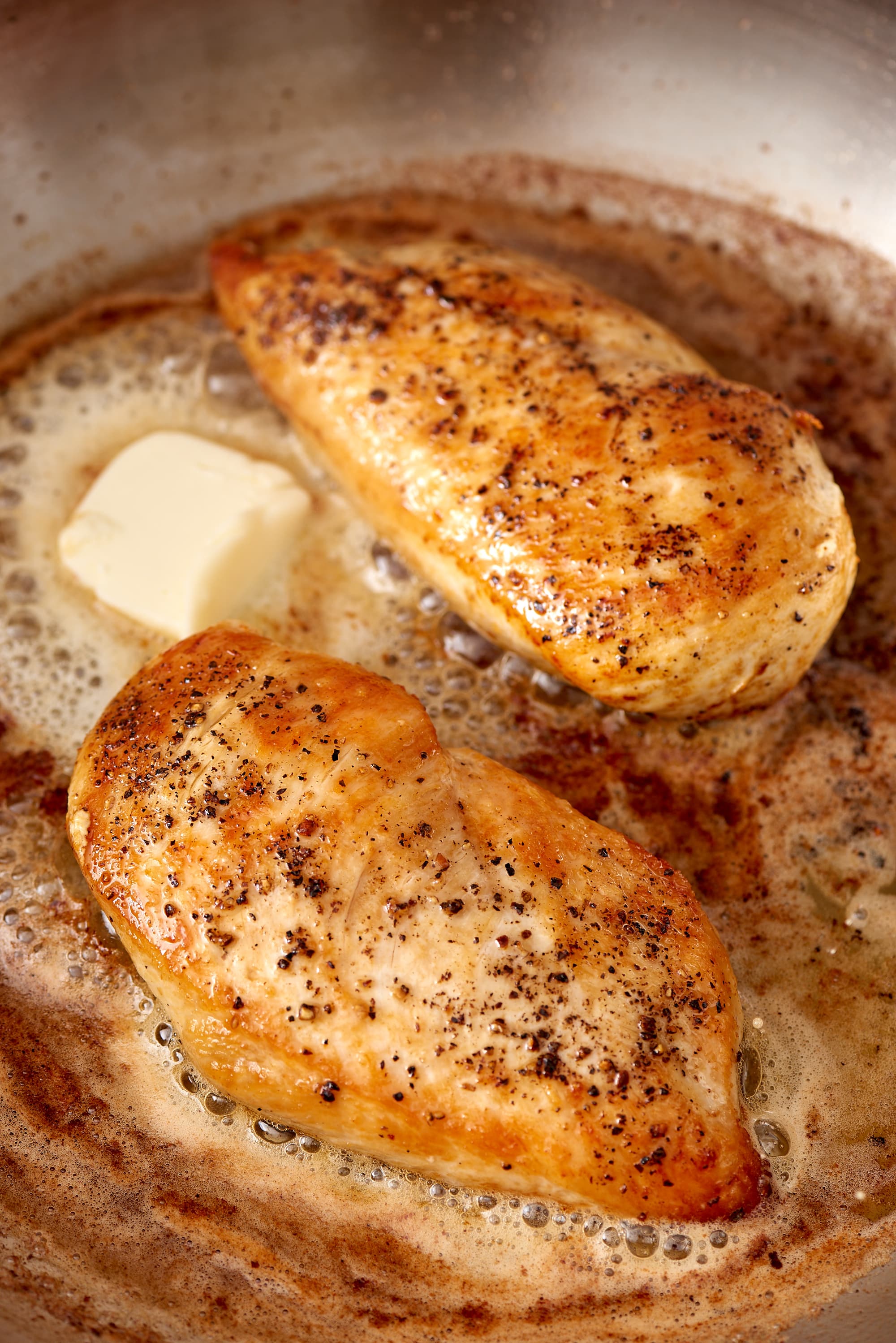
Pat the chicken dry with paper towels. This step is important for a good sear. Wet chicken will steam instead of browning. Season both sides with salt, pepper, and any other spices you like. Let the chicken sit at room temperature for about 10-15 minutes before cooking.
This helps it cook more evenly.
Cooking Process
- Heat the skillet over medium-high heat. Add the oil and let it get hot but not smoking. You can test the heat by dropping a small piece of chicken in; it should sizzle right away.
- Add the chicken in a single layer. Don’t crowd the pan. If you have more pieces, cook in batches.
- Cook undisturbed for 5-7 minutes (breasts) or 6-8 minutes (thighs). The chicken will release easily from the pan when it’s ready to flip. If it sticks, wait another minute.
- Flip the chicken and cook the other side for another 5-7 minutes (breasts) or 6-8 minutes (thighs). Lower the heat to medium if the chicken is browning too fast.
- Check for doneness with a meat thermometer. The thickest part should reach 165°F (74°C). If you don’t have a thermometer, cut into the center; the juices should run clear, not pink.
- Rest the chicken for 5 minutes before slicing. This keeps the juices inside.
| Step | Why It’s Important |
|---|---|
| Dry chicken with paper towels | Promotes browning, prevents steaming |
| Let chicken rest before cooking | More even cooking |
| Check temperature | Ensures safety, prevents overcooking |

Tips For Juicier Chicken
- Don’t move the chicken too much. Letting it cook undisturbed creates a golden crust.
- Use a heavy skillet. Cast iron retains heat and gives even browning.
- Pound thick pieces to an even thickness. This prevents dry edges and undercooked centers.
- Let it rest after cooking. Slicing too soon can make the meat dry.
Many new cooks skip the resting step, not realizing how much juicier the chicken can be. Also, using a thermometer removes any guesswork and prevents overcooking.
Common Mistakes To Avoid
- Overcrowding the pan: Too many pieces lower the heat and steam the chicken.
- Cooking straight from the fridge: Cold chicken cooks unevenly.
- Skipping the thermometer: Guessing can lead to dry or unsafe chicken.
- Not drying the chicken: Moisture blocks browning and flavor.
These mistakes are easy to fix and make a big difference in your results.
Variations And Serving Suggestions
You can change up the flavors by using different spices or adding a sauce. Try Italian seasoning, lemon zest, or smoked paprika. For a quick sauce, add a splash of chicken broth and scrape up the browned bits after cooking.
Serve skillet-cooked chicken with rice, pasta, salad, or vegetables. Slice it for sandwiches or wraps. If you want leftovers, keep them in the fridge for up to 3 days.
Here’s a simple comparison for flavor ideas:
| Flavor Profile | Key Spices | Serving Ideas |
|---|---|---|
| Classic | Salt, pepper, garlic powder | With roasted veggies |
| Spicy | Chili powder, paprika, cumin | In tacos or burritos |
| Lemon Herb | Lemon zest, thyme, basil | Over rice or greens |
Frequently Asked Questions
How Do I Prevent Chicken From Sticking To The Skillet?
Make sure the pan and oil are hot before adding the chicken. Also, don’t try to flip the chicken too soon—wait until it releases naturally.
What Oil Is Best For Skillet Cooking Chicken?
Olive oil and vegetable oil both work well. Choose an oil with a medium to high smoke point. Avoid butter alone, as it can burn at high heat.
Is It Safe To Eat Chicken With A Little Pink Inside?
No, chicken should be cooked to 165°F (74°C) at the thickest point. Even a small amount of pink can mean it’s not safe. Always check the internal temperature.
Can I Use Frozen Chicken?
It’s best to thaw chicken before skillet cooking. Frozen chicken cooks unevenly and can stay raw inside. If you’re in a rush, thaw chicken in cold water for 1-2 hours.
Last Word
Skillet-cooked chicken is both easy and versatile. With a few basic steps and some attention to detail, you can enjoy a meal that’s healthy, flavorful, and quick. The right technique means juicy, well-browned chicken every time—without stress.
Leave a Reply