
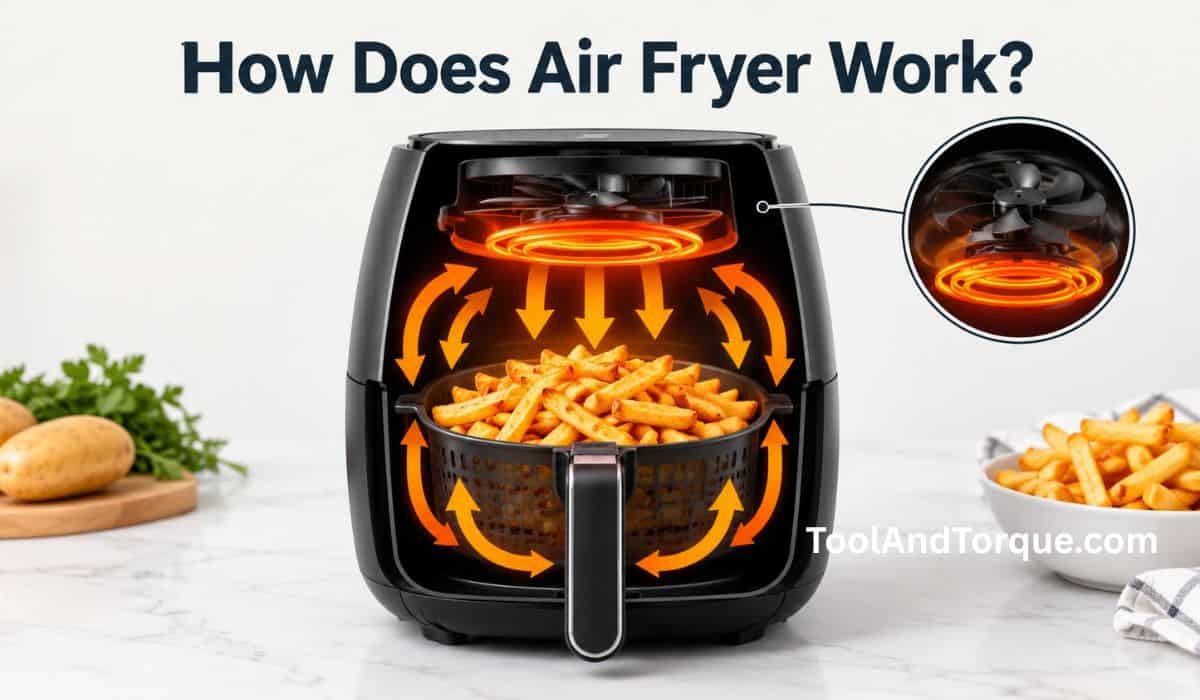

Learning how an air fryer works comes down to understanding high-speed convection heat. An electric coil at the top of the chamber generates intense radiant heat, while a mechanical fan pushes that air downward at high speed. The hot air rushes around the food in a perforated basket, sweeps away moisture, and mimics deep frying using only a light coating of oil. Hot air exits through an exhaust vent, leaving food crisp outside and juicy inside.
Table of Contents
The parts that make the fryer work
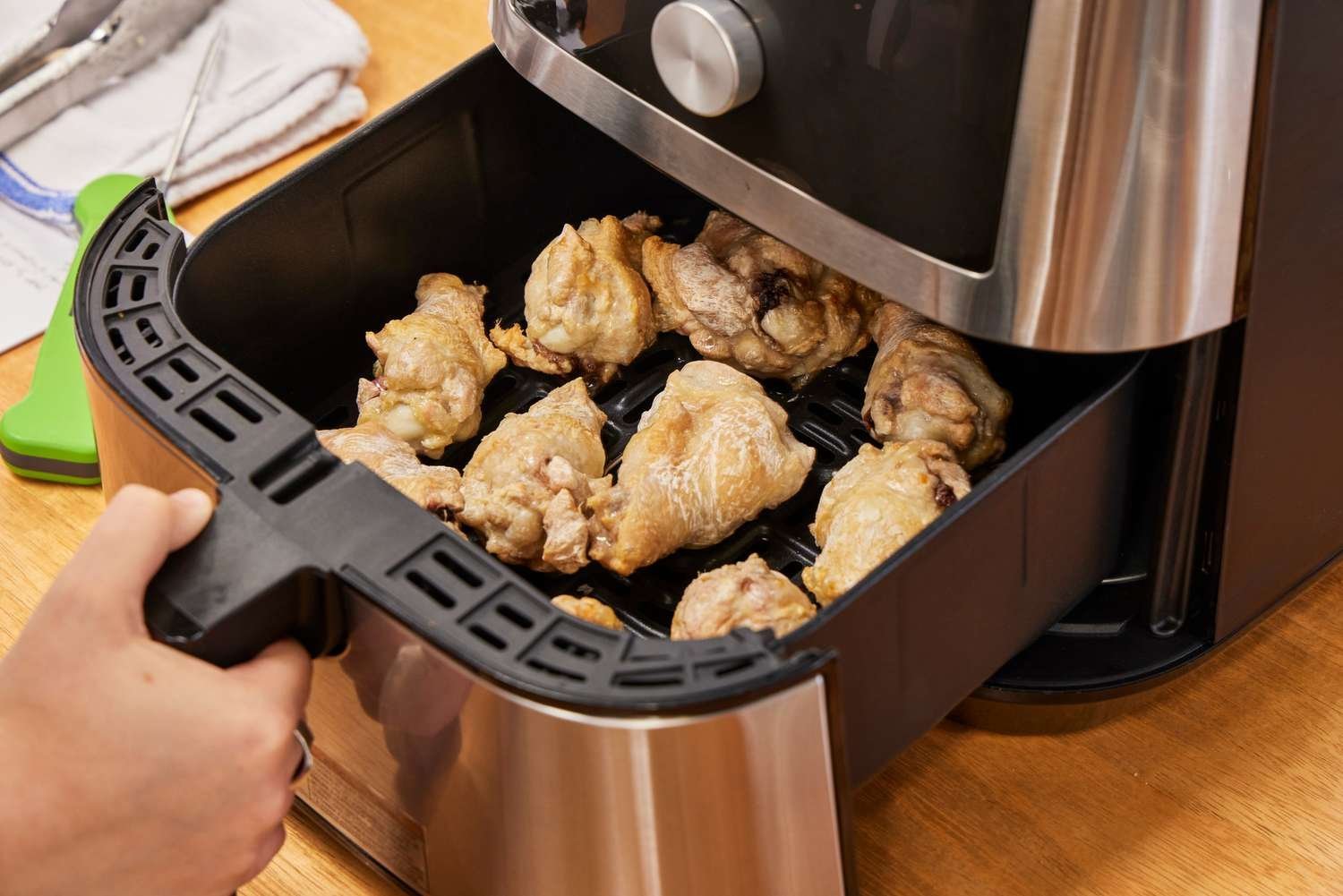
| Part or input | What it does | What you notice when it goes wrong |
|---|---|---|
| Heating element | Converts electricity into radiant heat | Food stays cold; appliance runs without heat |
| Convection fan | Circulates air at high speeds | Food browns unevenly; no blowing sound heard |
| Perforated basket | Holds food and allows airflow underneath | Bottom stays soggy; grease pools under food |
| Thermostat sensor | Measures chamber heat to cycle power | Food burns quickly or undercooks completely |
| Exhaust vent | Releases steam and excess pressure | Heavy steam escapes front; exterior overheats |
What happens, step by step
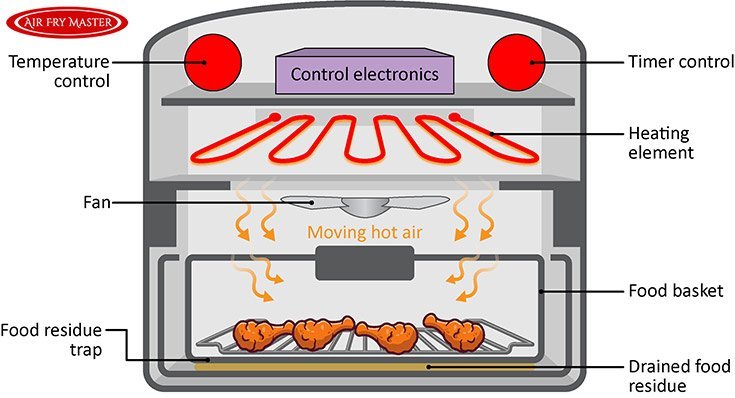
- Mains electricity energizes the coiled metal element at the top of the chamber, which begins glowing red-hot within 60 to 90 seconds of turning on the power switch.
- A high-speed electric fan directly above the element pulls air upward past the hot metal, heating the air stream to temperatures between 300°F and 400°F depending on your setting.
- The fan drives this superheated air downward along the outer walls of the cooking chamber, forcing it beneath the perforated basket base at roughly 10 to 15 miles per hour.
- Hot air rushes upward through the basket holes, making direct contact with all sides of the food simultaneously to strip surface moisture and accelerate the Maillard reaction within 3 to 5 minutes.
- Droplets of fat and loose liquids drip through the basket perforations into the solid drip pan below, separating completely from the cooking zone so the food doesn’t stew in grease.
- Humid air and expanding steam vent out through the rear exhaust port, keeping chamber humidity low so the outer starch layer crisps rather than steams over a standard 10-to-20-minute cycle.
- An internal thermal probe cuts power to the element whenever the set temperature is reached, then re-engages it as the air cools, maintaining an even cooking temperature within a 5-degree window.
Why this matters when something goes wrong?
Every cooking failure traces back to heat, airflow, or moisture escape. If the fan stops spinning, the appliance turns into a standard toaster oven: the top burns while the bottom remains raw. If you pack the basket completely full, you choke the air channels, and the food steams instead of frying.
Knowing this mechanism keeps you from making the mistake of adding wet batter, which simply drips through the basket onto the pan before the moving air can set it. This mistake ruins dinner and requires hours of difficult scrubbing. It also shows why grease smoke happens: fat dripping into the bottom pan gets superheated by the intense airflow. A trade-off here is crispness versus volume; an air fryer delivers crisp textures far faster than an oven, but it holds much less food per batch. If food turns out pale and dry, you used too little oil; if food turns out limp and soggy, the basket was overloaded. If internal electrical components fail, don’t open the plastic housing yourself; contact a certified appliance technician instead. Contact a certified appliance technician instead.
What you can change, and what you cannot?
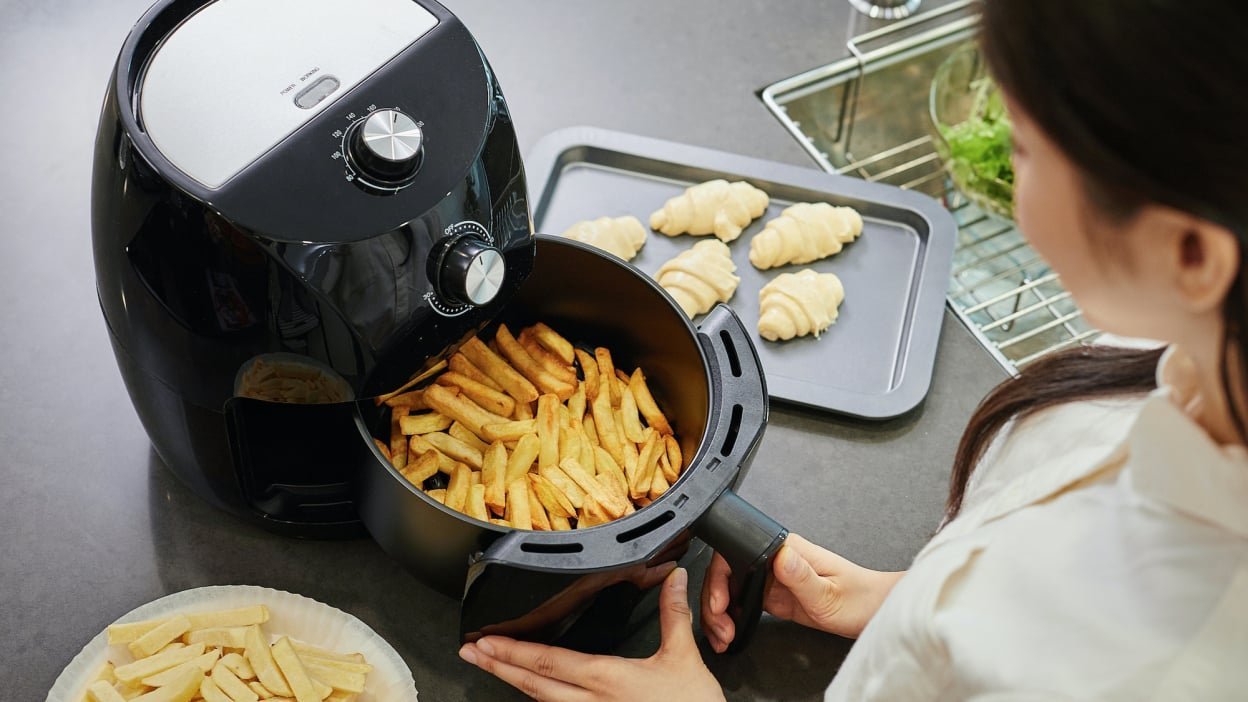
Things you control
- The cooking temperature between 180°F and 400°F for most standard units.
- The amount of surface oil applied, using 1 to 2 teaspoons per batch.
- The spacing of food items to allow open airflow around every piece.
- Shaking or flipping the food halfway through to balance heating.
Things fixed by design
- The fixed speed of the internal convection fan.
- The total cubic capacity of the internal cooking chamber.
- The maximum heating output, which varies by model — check the label for your unit’s wattage.
Getting more out of it
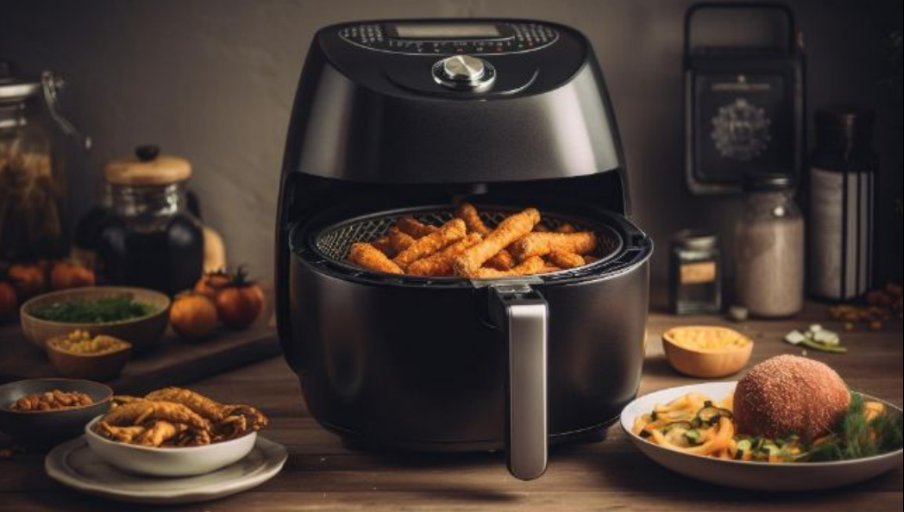
Use a decision rule: if food is light and flat, leave space between pieces; if food is thick and sturdy, you can shake the basket halfway through. Preheating for 3 minutes at 375°F ensures the element reaches full temperature before food enters the chamber. Lightly coat ingredients with 1 teaspoon of high-smoke-point oil using a pastry brush, which helps transfer heat from the rushing air into the food’s outer skin. Never crowd the basket past two-thirds capacity, or air circulation drops significantly. Pour 2 tablespoons of water into the bottom drip drawer when cooking fatty meats like bacon at 350°F; this prevents pooled grease from smoking without lowering chamber temperature. This appliance isn’t for large families wanting to cook full meals in a single pass, as multiple batches are mandatory.
Frequently asked questions
Can you put aluminum foil in an air fryer?
Yes, but you must weigh it down with food so it doesn’t blow into the heating element. Keep foil inside the basket only, never under it. Leaving the perimeter open ensures air circulates correctly.
Why is white smoke coming out of the air fryer?
Fat is burning in the bottom drip pan below the basket. High-speed air heats accumulated grease past its smoke point. Drain excess oil between batches or add two tablespoons of water to the pan to stop it.
How long does an air fryer take to preheat?
Between 2 and 5 minutes, depending on the chamber size and your target temperature. Smaller 3-quart units reach 400°F in roughly 2 minutes, while larger 6-quart models need up to 4 minutes to stabilize heat.
Is an air fryer just a small convection oven?
Yes, it operates on the exact same physical principle as a convection oven. However, its compact space and proportionally larger fan move air much faster, stripping surface moisture and crisping food significantly quicker.
Can you use cooking spray in an air fryer basket?
No, because aerosol propellants degrade the non-stick coating on the basket over time. Use a pump oil mister or rub cooking oil directly onto the food with a silicone brush instead.
Does an air fryer use a lot of electricity?
No, a standard unit draws between 1,400 and 1,700 watts during active cooking. Because cook times run roughly half as long as standard ovens, overall energy use is much lower per meal.
How do you know when chicken is cooked in an air fryer?
Check it with a digital meat thermometer until it reaches an internal temperature of 165°F, as established by the USDA. Never rely on external crispness or browning alone to judge doneness for poultry.
Leave a Reply