
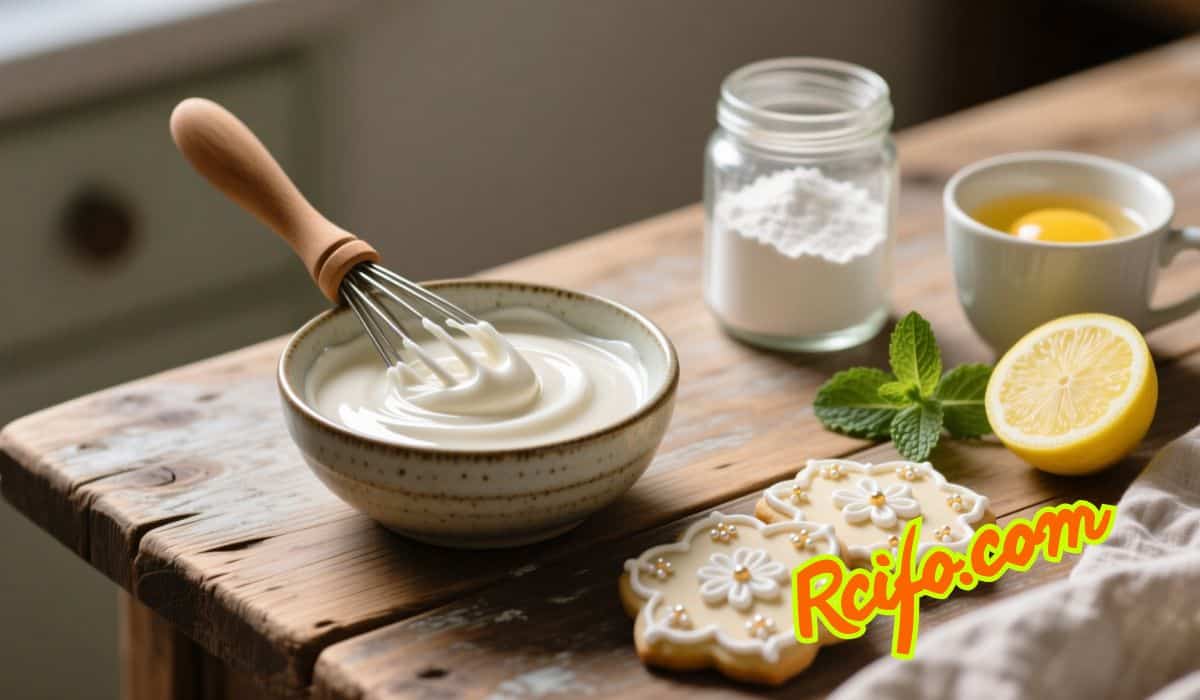

Royal icing is a staple in the world of cake and cookie decoration. Known for its smooth finish and ability to harden to a glossy, crisp shell, it’s perfect for intricate designs, lettering, and even cookie art. Traditionally, royal icing relies on meringue powder (or raw egg whites) to help stabilize the icing, but what happens if you’re looking for an alternative? Whether due to dietary restrictions, availability issues, or a preference for a more natural approach, there are plenty of ways to make royal icing without meringue powder.
In this guide, we’ll take a detailed look at how to make royal icing without meringue powder, providing you with easy-to-follow methods, troubleshooting tips, and product recommendations along the way.
What Is Royal Icing?
Definition and Ingredients
Royal icing is a type of icing made primarily from powdered sugar, egg whites (or egg white substitutes), and water. The result is a smooth, stiff mixture that dries hard and shiny, making it ideal for intricate designs on cookies, cakes, and cupcakes. The unique texture allows decorators to pipe fine lines, outlines, and even flood surfaces without worrying about the icing running or melting.
Basic Ingredients for Royal Icing:
- Powdered sugar (also called confectioners’ sugar)
- Egg whites or substitutes (aquafaba, pasteurized egg whites, etc.)
- Water
- Acid (typically lemon juice or vinegar) to help stabilize the egg whites
The addition of meringue powder to the recipe is a modern shortcut, typically made from powdered egg whites, sugar, and stabilizers. It helps improve the texture, makes it easier to whip the egg whites, and contributes to the overall stability of the icing.
Why Meringue Powder Is Commonly Used
Meringue powder simplifies the royal icing-making process by stabilizing the egg whites, which are delicate and prone to breaking down. It’s also a convenient way to avoid raw egg whites, which many people prefer to avoid due to food safety concerns. However, meringue powder isn’t the only option, and many bakers opt to avoid it for various reasons, whether it’s due to dietary restrictions, cost, or personal preference for whole ingredients.
Ingredients for Royal Icing Without Meringue Powder
If you’re looking to make royal icing without meringue powder, you have a few options. Each of these alternatives brings a different texture and level of stability to the icing, so it’s important to understand what works best for your project.
Key Alternatives to Meringue Powder
1. Egg Whites (Raw or Pasteurized)
Egg whites are the most common traditional ingredient in royal icing. They provide the necessary structure and stability for the icing to harden properly. Raw egg whites are often used, but some people prefer pasteurized egg whites to reduce the risk of salmonella.
Pros:
- Reliable texture and stability.
- Ideal for achieving a smooth finish.
Cons:
- Some people avoid raw eggs for food safety reasons.
- Takes extra care in handling raw eggs.
If you’re using raw eggs, it’s crucial to purchase fresh eggs from a reputable source, as they’ll be less likely to contain harmful bacteria.
2. Aquafaba (Vegan Option)
Aquafaba is the liquid from canned beans (usually chickpeas). It’s a popular egg white substitute for vegans and people with egg allergies. Aquafaba whips up just like egg whites, making it an excellent replacement for meringue powder in royal icing.
Pros:
- Vegan and egg-free.
- Easily accessible and affordable (from canned beans).
- Works well as a stabilizer.
Cons:
- May not hold up as firmly as egg whites in certain conditions.
- Can have a slight bean flavor that might influence the taste of your icing.
3. Gelatin
Gelatin is another excellent option for stabilizing royal icing. When mixed with water and powdered sugar, gelatin helps the icing set quickly, providing structure and stability without the need for egg whites or meringue powder.
Pros:
- Great for creating a sturdy texture.
- Suitable for people who are avoiding both eggs and vegan alternatives.
Cons:
- Requires some additional preparation (must be dissolved properly).
- Not suitable for vegans.
4. Cornstarch and Other Stabilizers
Stabilizers like cornstarch can be added to royal icing to help thicken the mixture and improve its shelf life. These ingredients are typically used in conjunction with egg whites or other substitutes to improve the texture.
Pros:
- Easy to use.
- Doesn’t alter the flavor of the icing.
Cons:
- Needs to be combined with other stabilizers to be effective.
- Can affect the consistency if not used carefully.
Step-by-Step Guide to Making Royal Icing Without Meringue Powder
Once you’ve selected your egg white substitute, you can begin making royal icing without meringue powder. Follow these easy steps, and you’ll have smooth, reliable icing in no time.
Method 1: Using Egg Whites (Fresh or Pasteurized)
Ingredients:
- 2 large egg whites (or 3 tbsp of pasteurized liquid egg whites)
- 4 cups powdered sugar
- 1-2 tbsp lemon juice (optional)
- Water (as needed)
Instructions:
- Prepare Your Mixing Bowl: Make sure your bowl is clean and free from any grease or oil. This ensures the egg whites can whip properly.
- Whip the Egg Whites: Beat the egg whites in a stand mixer or with a hand mixer on high speed until stiff peaks form. This should take about 3-5 minutes.
- Add Powdered Sugar: Gradually add powdered sugar, one cup at a time, and mix on low until fully incorporated.
- Add Lemon Juice (Optional): This helps to stabilize the egg whites and adds a slight tang to balance the sweetness.
- Adjust Consistency: If the icing is too thick, add a few drops of water to thin it out. For piping, you’ll want it to be stiff, but for flooding, it should be thinner.
Method 2: Using Aquafaba (Vegan Option)
Ingredients:
- 1/4 cup aquafaba (from canned chickpeas)
- 4 cups powdered sugar
- 1-2 tbsp lemon juice (optional)
Instructions:
- Whip the Aquafaba: Using a stand mixer, whip the aquafaba until it forms stiff peaks. This should take about 5-7 minutes.
- Add Powdered Sugar: Gradually add powdered sugar, one cup at a time, while mixing on low speed.
- Add Lemon Juice: Optional, but it helps with stabilization and balances the sweetness.
- Adjust Consistency: If the mixture is too thick, add a little water or more aquafaba. If it’s too runny, add more powdered sugar.
Method 3: Using Gelatin
Ingredients:
- 1 tbsp gelatin powder
- 1/4 cup cold water
- 4 cups powdered sugar
- 1-2 tbsp lemon juice (optional)
Instructions:
- Bloom the Gelatin: Sprinkle gelatin over cold water and let it sit for 5-10 minutes to bloom.
- Dissolve the Gelatin: Heat the bloomed gelatin over low heat until it’s fully dissolved. Allow it to cool slightly.
- Mix with Powdered Sugar: In a separate bowl, combine powdered sugar and gelatin mixture. Mix until fully incorporated.
- Add Lemon Juice: Add lemon juice for flavor and stabilization.
- Adjust Consistency: Thin the mixture with water if necessary.
Achieving the Perfect Consistency for Your Royal Icing
Consistency is key when working with royal icing. Depending on your decorating needs, you’ll want to achieve one of the following consistencies:
Stiff Consistency
- Use: Ideal for piping intricate details, flowers, and borders.
- Texture: Holds its shape and does not spread.
- How to Achieve: Use less water and more powdered sugar. The icing should be thick and stiff.
Medium Consistency
- Use: Perfect for outlining designs and creating small, sturdy decorations.
- Texture: Slightly soft but still holds its shape.
- How to Achieve: Add a small amount of water until the icing is easy to pipe but still holds its form.
Flooding Consistency
- Use: For flooding cookies, cakes, or larger surfaces.
- Texture: Thin enough to spread but not run off the surface.
- How to Achieve: Add a few drops of water at a time until the icing flows smoothly off the spatula.
Troubleshooting Common Issues
Icing Not Setting or Cracking
- Solution: Make sure the egg whites or substitute were whipped to stiff peaks. Allow adequate drying time. If you’re in a humid environment, use a fan to help the icing dry faster.
Icing Too Runny or Too Thick
- Solution: If your icing is too runny, add more powdered sugar. If it’s too thick, add a few drops of water to loosen it.
Separation or
Weeping
- Solution: This often happens when the icing hasn’t been mixed enough or the egg whites were not properly stabilized. Ensure thorough mixing, and use a stabilizer like cornstarch if needed.
FAQ – Common Questions About Royal Icing Without Meringue Powder
Is It Safe to Use Raw Egg Whites in Royal Icing?
Yes, but using pasteurized egg whites is recommended to avoid the risk of salmonella. Alternatively, you can use aquafaba or gelatin if you want to avoid eggs altogether.
How Long Does Royal Icing Last?
Royal icing made with egg whites lasts about 3-5 days when stored in an airtight container. If you use aquafaba or gelatin, it may last slightly longer.
Can I Freeze Royal Icing?
Yes, royal icing can be frozen. Store it in an airtight container or piping bags and thaw it in the fridge before use.
Conclusion
Making royal icing without meringue powder is entirely possible and can lead to delicious results with a few simple ingredients. Whether you’re using egg whites, aquafaba, or gelatin, you can achieve a stable, smooth icing perfect for decorating cakes and cookies.
The beauty of royal icing is that it can be customized to suit your dietary needs while still maintaining the quality and texture needed for intricate designs. With the techniques and tips outlined in this guide, you’ll be creating stunning, professional-looking baked goods in no time!
Leave a Reply