

Sure! I will write a detailed blog post based on the outline and the topic you’ve provided. This post will be lengthy and provide a thorough analysis of the differences between bread machine yeast and active dry yeast, as well as other important aspects. I will also integrate useful tips, suggestions, and frequently asked questions.
Introduction
Baking bread is an art, but getting the best loaf often comes down to one critical ingredient: yeast. Among the various types of yeast available, two common options are bread machine yeast and active dry yeast. While both serve the same basic purpose—to help your dough rise—they differ in some important ways. Understanding these differences can significantly affect your baking results.
In this article, we’ll dive deep into the characteristics of bread machine yeast and active dry yeast. You’ll learn how they work, when to use each one, and how to choose the right yeast for your specific recipe. Whether you’re a seasoned baker or a beginner, this comprehensive guide will help you make informed decisions about which yeast to use for the perfect loaf of bread.
Understanding Yeast
What is Yeast?
Yeast is a living organism, a type of fungus, that plays a crucial role in baking. When added to dough, yeast ferments the sugars in the flour and produces carbon dioxide gas. This gas gets trapped in the dough, causing it to rise and develop texture. Yeast also produces alcohol, which contributes to the flavor of the bread.
There are several types of yeast used in baking, each with its own characteristics and ideal applications. In this article, we’ll focus on the two most commonly used types: bread machine yeast and active dry yeast.
Types of Yeast Used in Baking
- Active Dry Yeast: This is the most traditional and widely available form of yeast. It comes in granules and needs to be dissolved in warm water before it can be used in a recipe.
- Instant Yeast: Similar to active dry yeast but with finer granules. Instant yeast doesn’t require proofing and can be added directly to the flour.
- Bread Machine Yeast: A variety of instant yeast specifically designed for use in bread machines. It’s formulated to work well with the longer, automated rise times in bread makers.
- Fresh Yeast: This is a moist, perishable form of yeast that is typically used by professional bakers. It has a shorter shelf life and must be refrigerated.
Bread Machine Yeast vs Active Dry Yeast: What’s the Difference?
What is Bread Machine Yeast?
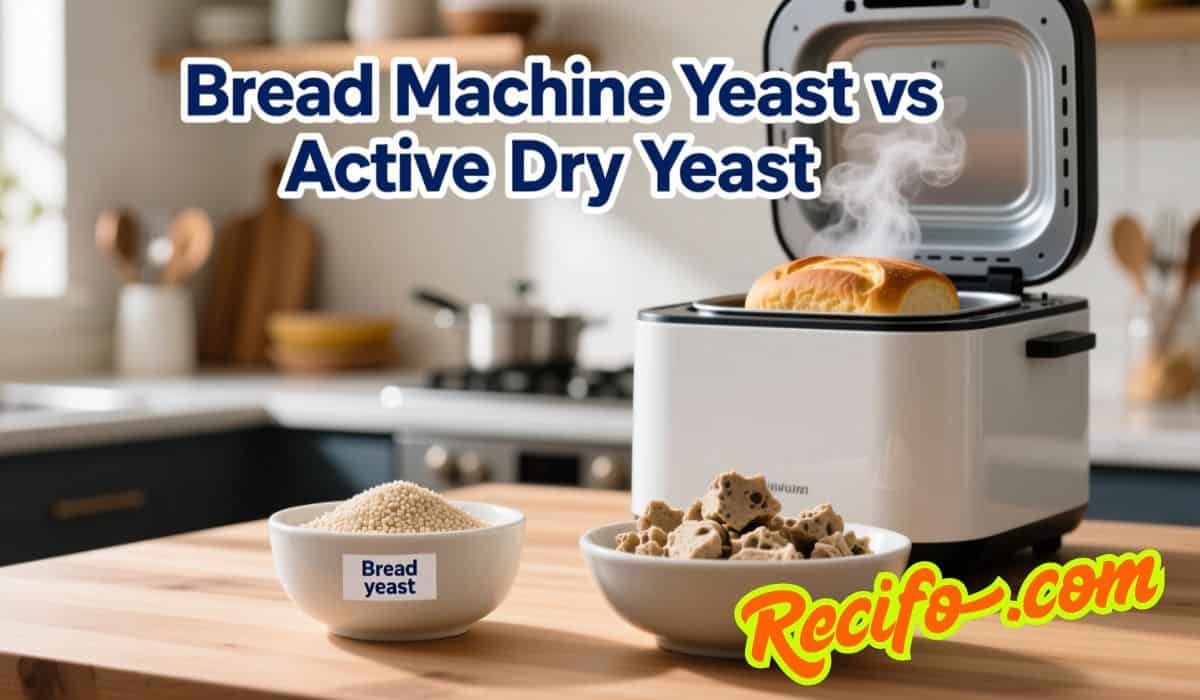
Bread machine yeast is a type of instant yeast specially designed for use in bread machines. The primary difference between bread machine yeast and other types of yeast is that it’s optimized for the longer rise times typical in automatic bread makers. Bread machine yeast is finely ground, which allows it to dissolve quickly in the dough without needing to be dissolved in water beforehand.
What is Active Dry Yeast?
Active dry yeast is the traditional yeast that many home bakers are familiar with. It’s sold in granules that need to be proofed or activated by dissolving them in warm water. When proofing active dry yeast, you’re essentially waking up the dormant yeast cells, making them ready to do their job in the dough.
Active dry yeast has larger granules compared to instant or bread machine yeast. This means that it may take longer to dissolve and activate fully, which is why some recipes ask for it to be dissolved in warm water before mixing with other ingredients.
Key Differences Between Bread Machine Yeast and Active Dry Yeast
| Feature | Bread Machine Yeast | Active Dry Yeast |
|---|---|---|
| Granule Size | Finer granules for quick dissolution | Larger granules that need proofing |
| Activation Process | No need to proof, can be added directly to dry ingredients | Needs to be dissolved in warm water |
| Usage | Best for bread machines and recipes with quick rise times | Best for traditional hand-mixed bread recipes |
| Rise Time | Shorter rise time due to faster activation | Longer rise time due to need for activation |
| Flavor | Generally similar, but may have a slightly different result in flavor | More traditional yeast flavor |
| Storage | Longer shelf life than active dry yeast | Needs to be used quickly after opening |
How Do They Affect Your Baking?
Texture and Rise: Bread Machine Yeast vs Active Dry Yeast
The texture and rise of your bread are primarily influenced by how well your yeast is activated and how it interacts with the dough. Since bread machine yeast is designed to work with bread machines, it tends to provide a quicker, more even rise. This makes it ideal for recipes that require less time or automated machines that control rise times precisely.
On the other hand, active dry yeast requires a longer time to activate because it has larger granules. This slower activation process can lead to a more gradual rise, which is often desired in artisan breads where flavor development is important.
While both yeasts produce light, airy loaves, you may notice slight differences in texture when using them. Bread made with bread machine yeast may have a slightly finer crumb, while bread made with active dry yeast might have a more rustic texture.
Taste Profile
There is a common belief that active dry yeast produces a better flavor due to its slower fermentation process. The longer rise time allows for more flavor to develop, especially in artisan bread recipes. Bread machine yeast, with its quicker rise, may not have as much time for complex flavors to develop.
However, the difference in taste between bread machine yeast and active dry yeast is subtle. Many bakers report that unless you’re making a very long-rise bread, such as sourdough or a no-knead loaf, the taste is almost identical.
Which One Should You Choose?
Best Uses for Bread Machine Yeast
Bread machine yeast is best used in recipes that call for a bread machine or in situations where a fast rise time is needed. This type of yeast works well with bread machines because it’s designed for automatic cycles. It’s also a good option for people who want to make quick, no-fuss loaves without the need to proof the yeast beforehand.
Ideal Recipes for Bread Machine Yeast:
- Bread machine recipes
- Quick-rise bread recipes
- Buns and rolls that need a faster rise
- Pizza dough in a bread machine
Best Uses for Active Dry Yeast
Active dry yeast is the best choice for traditional bread baking, particularly for recipes that don’t involve a bread machine. It’s ideal when you want more control over the rise times and when you want to develop more complex flavors in your bread.
Ideal Recipes for Active Dry Yeast:
- Traditional hand-mixed bread recipes
- Sourdough bread (when used as a starter)
- Artisan-style breads with long rise times
- Recipes that don’t require an automated bread machine
Can You Substitute One for the Other?
Yes, you can substitute bread machine yeast for active dry yeast and vice versa, but there are a few things to keep in mind:
- If substituting bread machine yeast for active dry yeast, use the same amount.
- If substituting active dry yeast for bread machine yeast, you may need to proof it in warm water before using it in the recipe.
It’s important to adjust the rise times accordingly. Bread machine yeast is designed to work faster, so you may need to allow a bit more time for the dough made with active dry yeast to rise.
How to Store Yeast Properly?
Storing Bread Machine Yeast
Bread machine yeast has a longer shelf life compared to active dry yeast, making it more convenient for long-term storage. You can store it in its original packaging in a cool, dry place. Once opened, it’s best to keep it in an airtight container to maintain freshness.
Storage Tips for Bread Machine Yeast:
- Store in a cool, dry place (away from heat and light).
- Keep the yeast tightly sealed to avoid exposure to air.
- Consider refrigerating or freezing for even longer shelf life.
Storing Active Dry Yeast
Active dry yeast, like other types of yeast, needs to be stored in a cool, dry place. However, once opened, it’s important to use it fairly quickly. For best results, keep it in a tightly sealed container and store it in the refrigerator or freezer.
Storage Tips for Active Dry Yeast:
- Store unopened yeast in a cool, dry place.
- Once opened, store in an airtight container in the fridge or freezer.
- Don’t store it in the pantry for extended periods once opened.
Tips and Tricks for Better Baking
Hydration: How Water Temperature and Yeast Activation Can Impact Baking
The temperature of the water used to activate yeast plays a crucial role in how well it works. If the water is too hot, it can kill the yeast. If it’s too cold, the yeast won’t activate properly. For active dry yeast, the ideal water temperature is between 105°F and 110°F (40°C-43°C). Bread machine yeast typically doesn’t require proofing but should be mixed with dry ingredients before adding water.
Yeast Troubleshooting
If your dough doesn’t rise properly, there are a few possible reasons:
- Yeast might be old or expired.
- The water temperature was too hot or cold.
- The dough wasn’t given enough time to rise.
Make sure to test your yeast before using it to ensure it’s still active.
Frequently Asked Questions
Can I use bread machine yeast in a traditional recipe?
Yes, bread machine yeast can be used in traditional recipes. Just add it directly to the dry ingredients without proofing it first.
How do I know if my yeast is still good?
Test it by dissolving a small amount in warm water with sugar. If it bubbles and foams within 10 minutes, it’s still active.
Can I use active dry yeast in a bread machine?
Yes, but you’ll need to proof it in warm water before adding it to the bread machine.
What happens if I use too much yeast?
Using too much yeast can cause the dough to rise too quickly, resulting in a bread with a coarse texture or an overly yeasty taste.
Can I use bread machine yeast for making pizza dough?
Yes, bread machine yeast works well for pizza dough recipes, providing a quick and even rise.
Conclusion
Both bread machine yeast and active dry yeast have their unique advantages. Bread machine yeast is ideal for those who want quick, easy results using a bread machine, while active dry yeast is perfect for more traditional, hands-on baking. By understanding the differences between these two types of yeast, you can choose the one that best fits your baking needs.
Happy baking!
Leave a Reply