
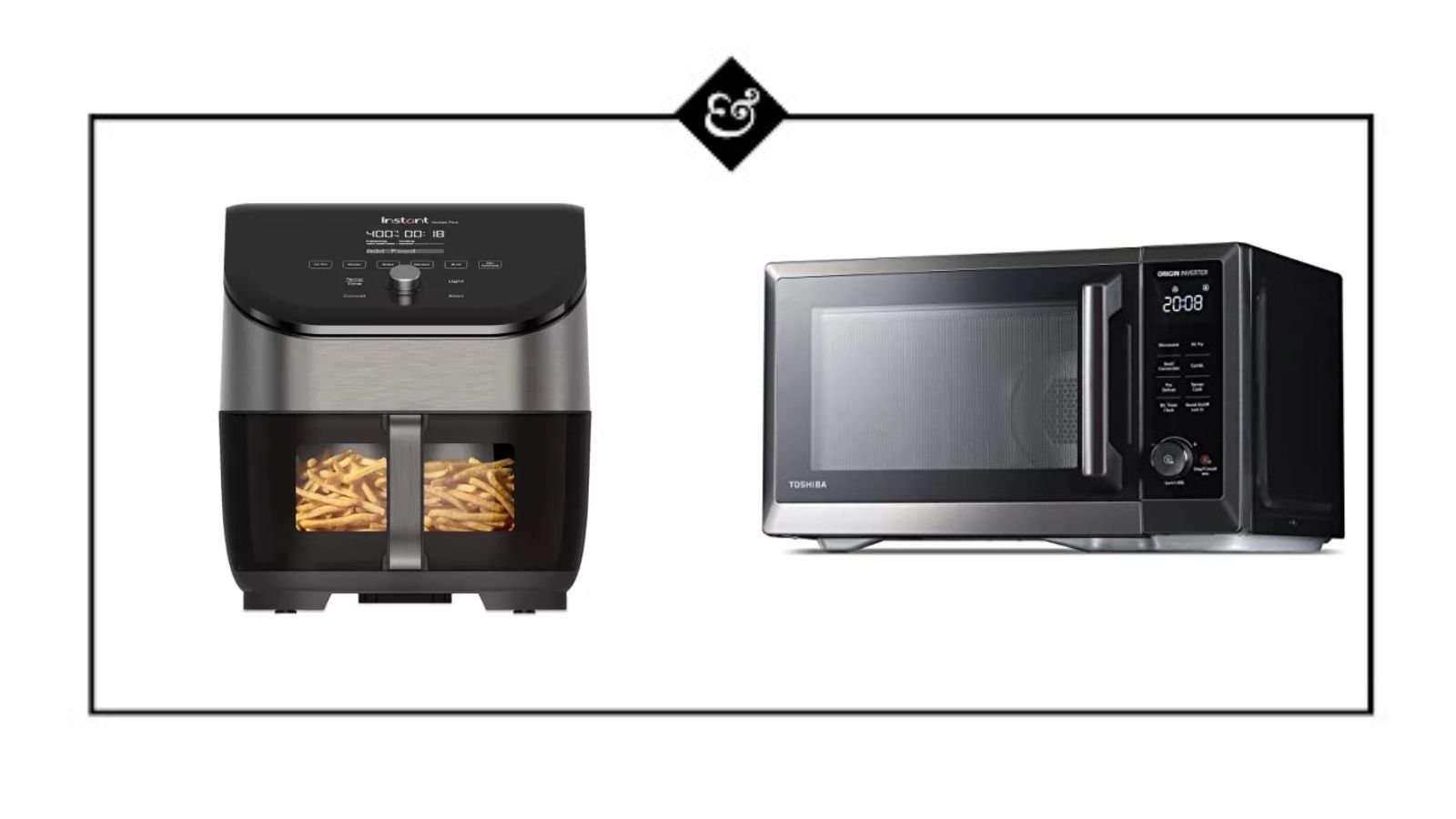

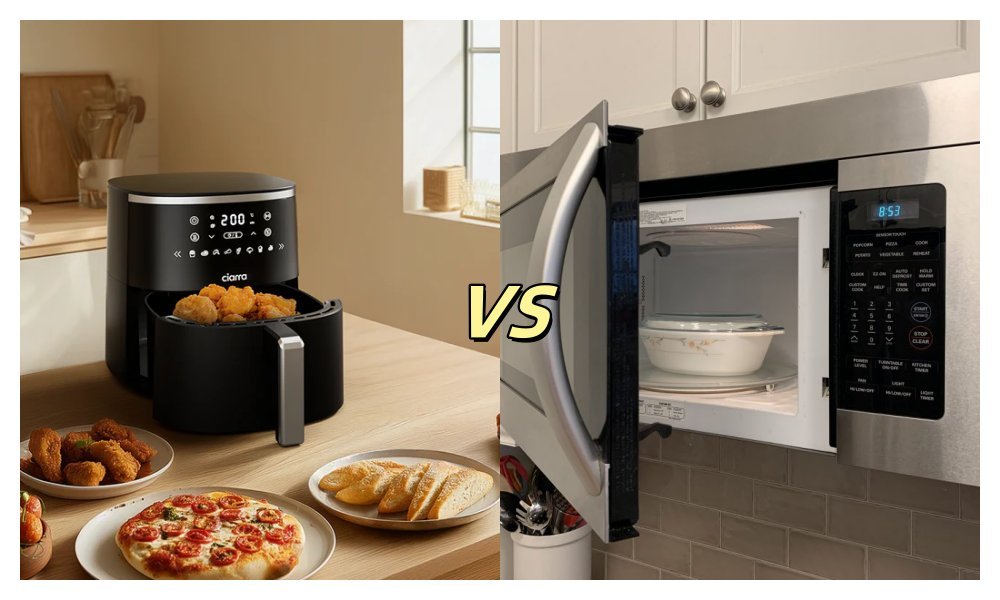
An air fryer gives you crisp, browned food with simple heat, which settles whether an air fryer or microwave which is better for most everyday cooking. However, a microwave wins easily whenever you need to reheat soup, boil water, or warm soft meals in under three minutes without drying them out.
Table of Contents
How the air fryer and microwave compare?
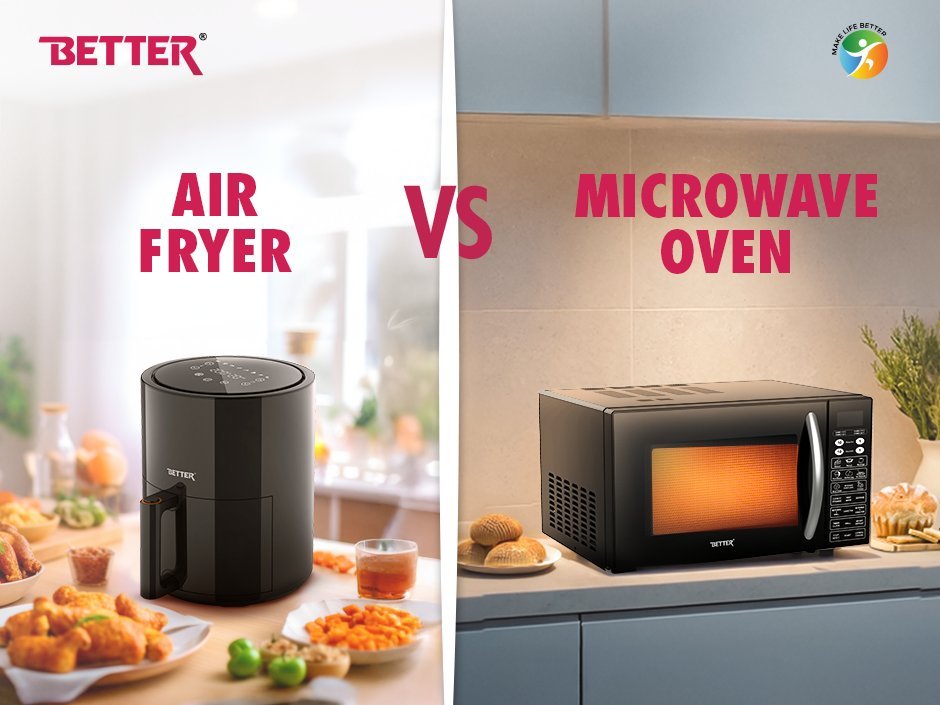
Choosing between these appliances depends on whether you value cooking speed, crispy textures, or counter space.
| Method | How long | Effort | Cost | Best for |
|---|---|---|---|---|
| Microwave oven | 1 to 5 minutes | Low | Low | Liquids, steaming, and quick reheating |
| Air fryer | 10 to 25 minutes | Medium | Medium | Crispy snacks, roasting, and reheating fried food |
| Combi microwave | 5 to 20 minutes | Medium | High | Small kitchens needing both tools in one |
Cooking with an air fryer
An air fryer functions like a compact, powerful convection oven that circulates dry heat rapidly around food.
- Arrange your food inside the basket in one flat layer, making sure items don’t overlap.
- Set the temperature to 375°F (this assumes a standard 1,500-watt basket model; larger drawer units cook slightly slower).
- Pull the basket out halfway through cooking to shake or flip the food.
- If you’re reheating meat or poultry leftovers, use a food thermometer to confirm they reach 165°F inside.
This appliance delivers crunchy french fries, blistered vegetables, and roasted chicken with a toasted crust. It also reheats pizza and pastry without turning them soggy. But its weakness is obvious: you can’t heat broths, coffee, or wet stews in it, and sticky wet batters drip straight through the wire tray.
Heating with a microwave
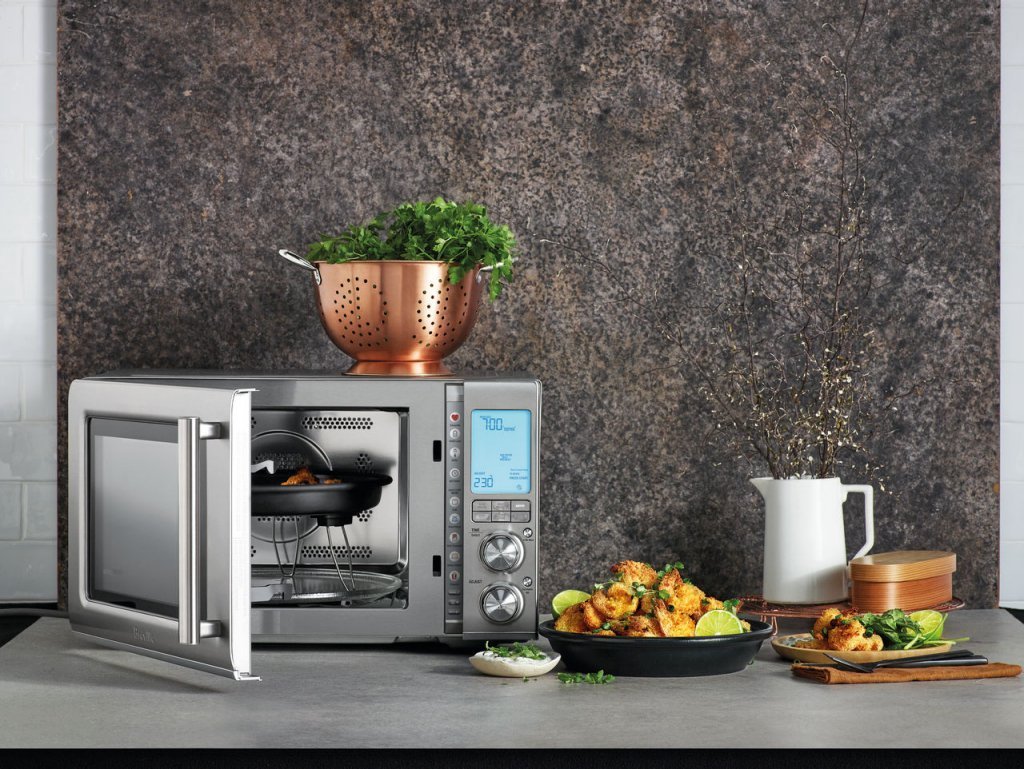
A standard countertop microwave heats water molecules inside food quickly using electromagnetic energy.
- Put your food in a microwave-safe glass or ceramic dish, leaving the center clear if you’re heating a large plate.
- Cover the dish with a vented silicone lid or paper towel to trap steam.
- Heat on high for 2 minutes (this assumes a 1,000-watt unit; at 700 watts add about 40%, and at 1,200 watts check 30 seconds early).
- Stir the food thoroughly from the edges to the middle to remove cold spots, then verify reheated leftovers reach 165°F.
A microwave excels at warming liquids, steaming fresh broccoli, and softening chilled meals gently. The clear trade-off is surface texture, because trapped steam prevents any browning or crunch.
Using a combination microwave
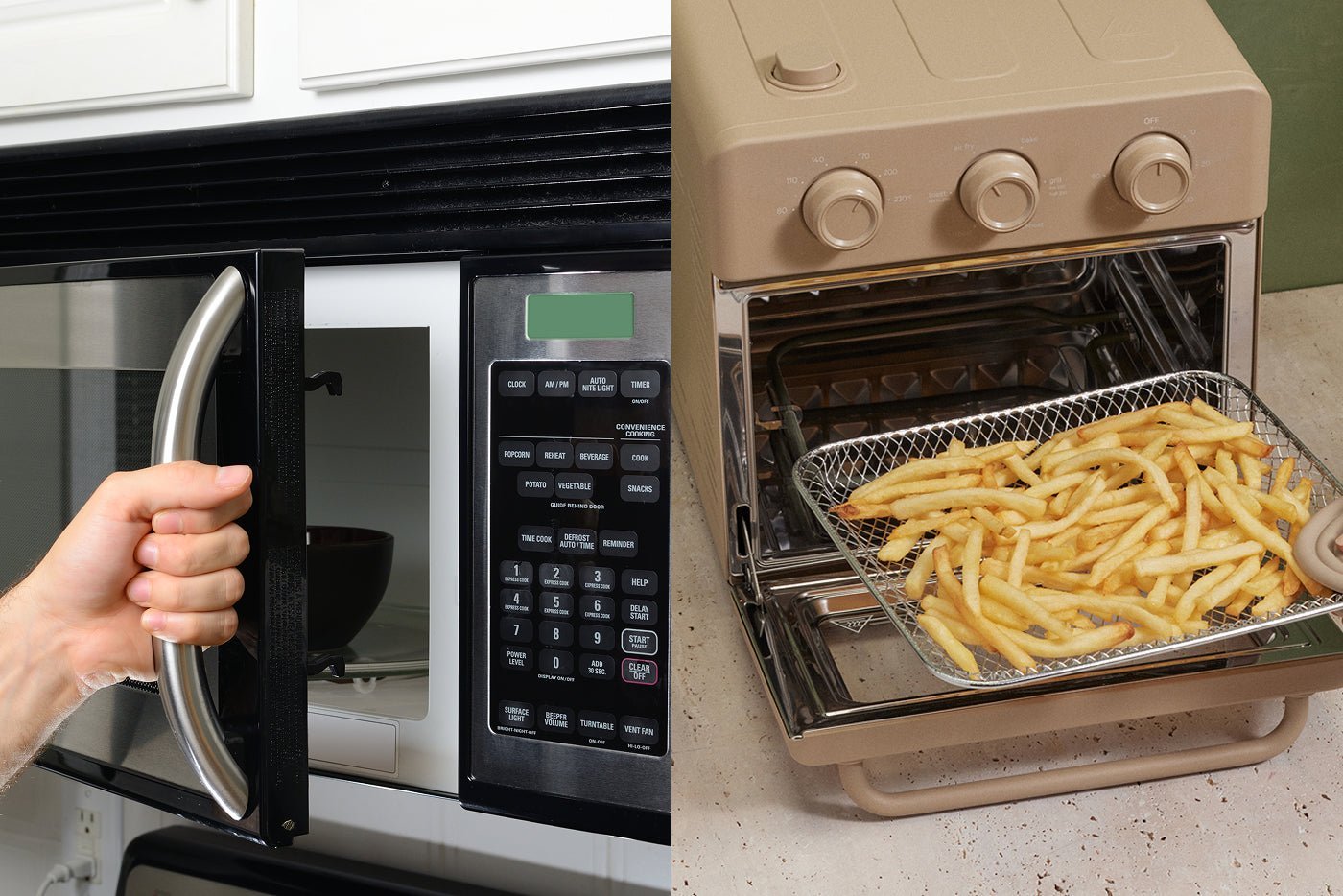
A combi microwave pairs a traditional microwave magnetron with an electric heating element and fan inside one metal cabinet.
- Place the meal on the included metal wire rack to lift it closer to the heating element.
- Select the combination setting that balances lower microwave power with 375°F convection heat.
- Let the cycle run for 8 to 12 minutes without opening the door early.
- Test the thickest part of any cooked meat to ensure it hits the safe internal temperature.
This setup browns baked goods and roasts poultry while cooking faster than a standard countertop fryer. The downside is its steep learning curve and complicated controls. A fourth alternative, the basic toaster oven, fits the comparison table for budget baking, but it takes far too long to warm weekday meals.
Which one should you use?
If you’re in a hurry, pick the microwave because it can warm a chilled bowl of stew or thaw frozen ground beef in under four minutes.
If you’re doing this for the first time, use the air fryer because its clear heat controls make burning your meal far less likely.
If you want the best possible result whatever it takes, choose the air fryer for solid foods to get superior crunch and caramelized color.
If you want speed, you give up crispiness; if you want crunch, you give up the fast heating of steam. This setup isn’t for people who batch-cook whole casseroles for six guests, as both appliances have limited internal chamber volumes.
The rules that apply whichever way you choose
Safety standards from the United States Department of Agriculture require all reheated leftovers to reach an internal temperature of 165°F before eating. Never guess doneness by touching the outside of the container.
Always prepare food by cutting it into uniform pieces so heat reaches the middle evenly. Halfway through the timer, pause the cycle to stir liquids or shake solid food. A common mistake is crowding the basket or plate to save time, which traps steam, leaves dangerous cold pockets, and costs you another ten minutes of recooking.
Once finished, let the dish sit for one minute so heat equalizes. Both appliances carry high-voltage parts inside; never remove outer metal covers yourself, and leave electrical repairs to a licensed appliance technician.
Frequently asked questions
Can an air fryer replace a microwave completely?
No, an air fryer can’t replace a microwave completely because it can’t safely boil water, warm coffee, or reheat soups. It also dries out foods that need gentle steam, such as rice or mashed potatoes.
Is an air fryer healthier than a microwave?
No, neither appliance makes food inherently healthier on its own. While an air fryer cuts added cooking oil compared to deep frying, a microwave preserves water-soluble vitamins better by heating vegetables much faster with minimal water.
Why does food get soggy in the microwave?
Food gets soggy in the microwave because steam escapes from inside the ingredients and gets trapped on the surface. Without dry circulating air or high heat elements, the moisture can’t evaporate away into the room.
How long do you reheat pizza in an air fryer?
Reheat pizza at 350°F for 3 to 4 minutes in an air fryer. This timing assumes standard thin-crust slices; for deep-dish pizza, lower the heat to 325°F and cook for 6 minutes instead.
What happens if you put foil in an air fryer?
Aluminum foil works safely in most air fryers as long as food holds it down completely. If the fan blows loose foil into the upper heating element, it can ignite or cause an electrical short.
Is it safe to leave an air fryer plugged in?
Yes, it’s generally safe, but unplugging it when idle prevents accidental activation and power surge damage. Always leave five inches of clear space behind the rear air vent to stop heat damage on walls.
Final Word
Take a close look at your dinner habits tonight before you spend your money. If you love crunchy roasted vegetables and fries, you’ll be happier with the mini convection oven. If you just want warm leftovers after a long workday, save your counter space and stick with your old reheating standby.
Leave a Reply