
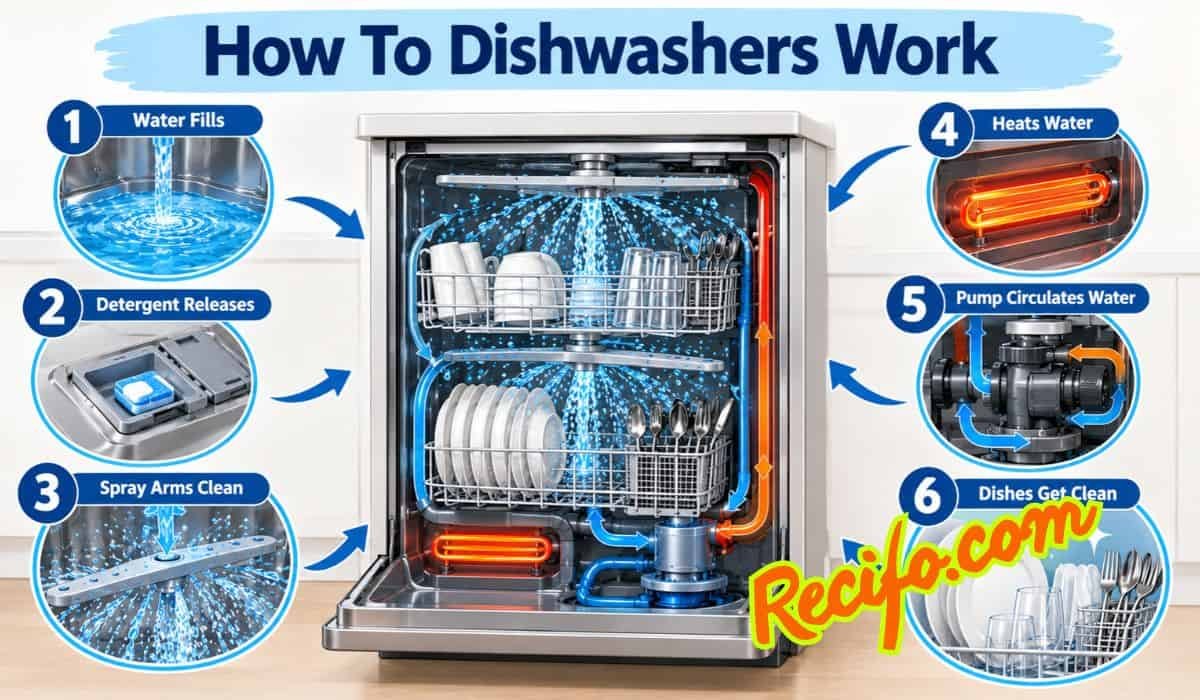

A dishwasher cleans plates and cutlery by spraying hot water mixed with detergent through rotating arms, then rinsing and drying the items with heat. You’ll find that how to dishwashers work is by using an internal pump to circulate water, which acts like a mechanical scrub to remove food particles efficiently.
Table of Contents
Inside how dishwashers work
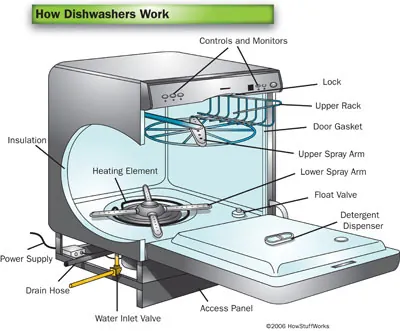
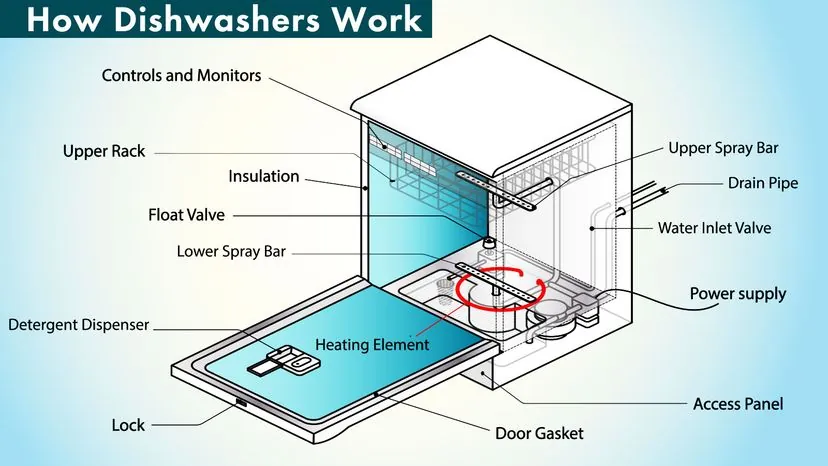
The machine relies on several key parts to manage the cleaning cycle. If you notice strange noises or poor cleaning, check these components first. You can confirm specific part functions by checking your owner’s manual provided by the manufacturer for your specific model number.
| Part or input | What it does | What you notice when it goes wrong |
|---|---|---|
| Inlet valve | Brings fresh water in | Water doesn’t fill basin |
| Heating element | Warms water and air | Dishes remain cold and wet |
| Spray arms | Distributes water under pressure | Food stays stuck on dishes |
| Drain pump | Removes dirty water out | Water pools in the bottom |
| Detergent dispenser | Releases soap at set times | Dishes look cloudy or greasy |
| Float switch | Prevents water overflow | Water leaks onto the floor |
The Cleaning Process
- The inlet valve opens to let water into the base, usually taking about 60 to 90 seconds depending on your home’s water pressure.
- The heating element warms the water to between 120°F and 150°F, which is the temperature range needed to dissolve grease effectively according to the ENERGY STAR guidelines.
- The circulation pump forces water through the spray arms, causing them to spin and blast water against the dishes for 20 to 40 minutes.
- The machine drains the dirty water and pulls in fresh water for the rinse cycle, which lasts about 10 to 15 minutes to remove soap.
- A final rinse happens with a rinse aid to prevent spots, taking roughly 5 minutes to complete the process before the final stage.
- The heating element activates again to dry the dishes, which takes 20 to 30 minutes depending on your chosen cycle settings and model.
Why Parts Fail During Operation
The cleaning process depends on high pressure and specific temperatures to break down food oils. When a dishwasher fails to clean properly, the most common issue is a blockage in the spray arms. Small food bits, like lemon seeds or plastic wrappers, often clog the tiny holes in these arms. If water can’t spray with enough force, the detergent never reaches the surface of your plates.
Another frequent problem involves the heating element. If the water stays cold, the fats on your dishes won’t melt away, leaving a greasy film. You should verify your water heater setting is at least 120°F, as the dishwasher often can’t raise the temperature enough if the input water is too cold. Always clear debris from the filter at the bottom of the basin to keep the pump running freely and prevent clogs.
Parts You Control Versus Fixed Design
Parts you can manage
- Clear food scraps off plates before loading.
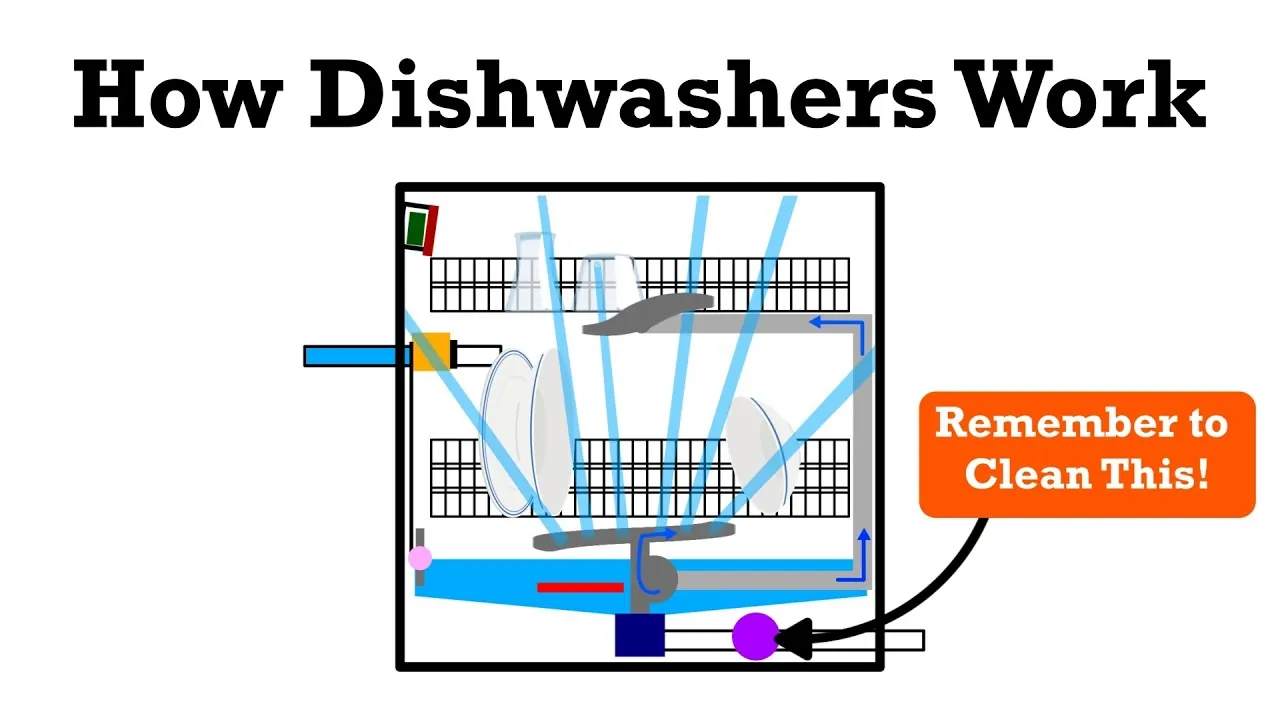
- Clean the bottom filter as needed based on your usage, referring to the owner’s manual for specific guidance.
- Check spray arm holes for blockages regularly.
- Add rinse aid to the dispenser monthly.
Fixed design features
- The internal pump power is set by the factory.
- The heating element wattage is fixed by design.
- The sensor logic for cycle timing is permanent.
If you hear grinding noises or smell burning plastic, stop the machine immediately and unplug it. These signs point to electrical or motor failures that require a professional technician. Attempting to fix electrical components yourself can void your warranty or cause a fire hazard per the Consumer Product Safety Commission safety tips.
Habits for Better Results
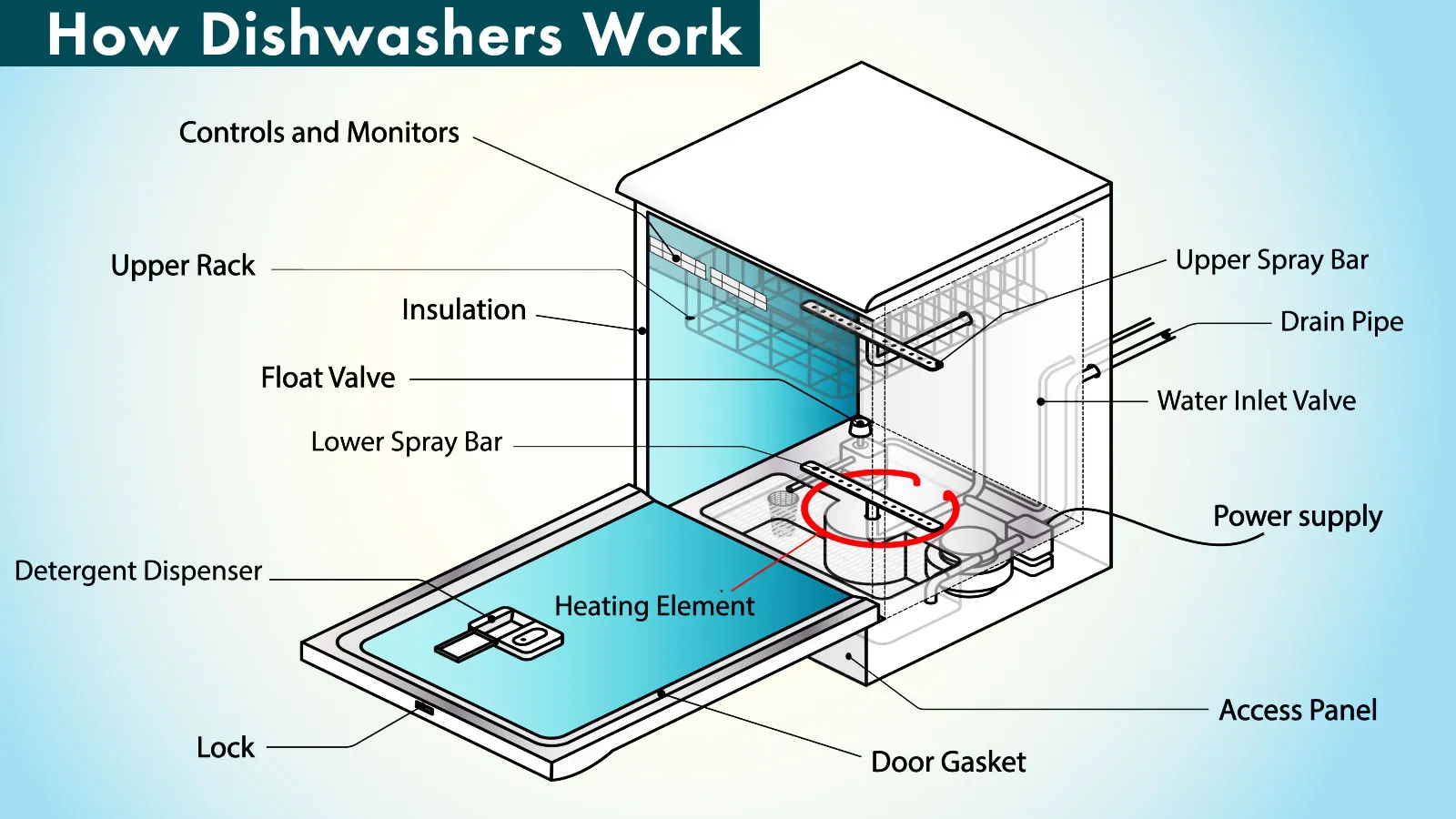
To get the most out of your machine, always load items so they face the center, as the spray arms rotate from the middle. Don’t block the detergent dispenser door, or the soap won’t release into the water. Finally, run your kitchen sink faucet until the water is hot before starting the cycle, ensuring the dishwasher begins with warm water instead of cold.
Frequently asked questions
How much water does a dishwasher use?
A modern energy-efficient dishwasher uses about 3 to 5 gallons of water per cycle, assuming the machine is running a standard wash. Older models from before 2010 often used significantly more, sometimes exceeding 10 gallons per load.
Why is my dishwasher leaving white spots?
White spots usually come from hard water minerals, which you can fix by adding a rinse aid to the dispenser. If the problem persists, check your local water hardness levels or contact your municipal water authority for advice on using a softening agent.
How often should I clean the filter?
You should clean the filter regularly to prevent food buildup from affecting water flow; check it based on your usage and consult the owner’s manual to ensure it remains clear of debris.
Is it safe to leave the dishwasher running while I sleep?
It’s safe to run the dishwasher at night provided the unit is maintained and the hoses are free of leaks. Always ensure your smoke detectors are working properly in the kitchen area to provide early warning of any electrical faults.
Why does my dishwasher smell bad?
A bad smell often comes from rotting food trapped in the bottom filter or the rubber door seal. Clean these areas with a damp cloth and vinegar to remove the buildup that causes the odor to linger between washes.
What happens if I use regular dish soap?
Using regular dish soap will cause excessive suds that can leak out of the door and potentially damage the motor. Always use specialized detergent designed specifically for automatic dishwashers to prevent overflow and mechanical issues.
Does it matter if I overload the dishwasher?
Overloading prevents water from reaching all surfaces, which results in dirty dishes and longer drying times. Arrange your items so that each piece has space for water to flow freely, otherwise you’ll end up washing the same items twice.
Conclusion
The performance of your dishwasher depends on the clear path of water from the pump to the plates. By keeping the filter clear and the spray arm holes open, you ensure the internal mechanics can do their job every time you press start.
Leave a Reply