
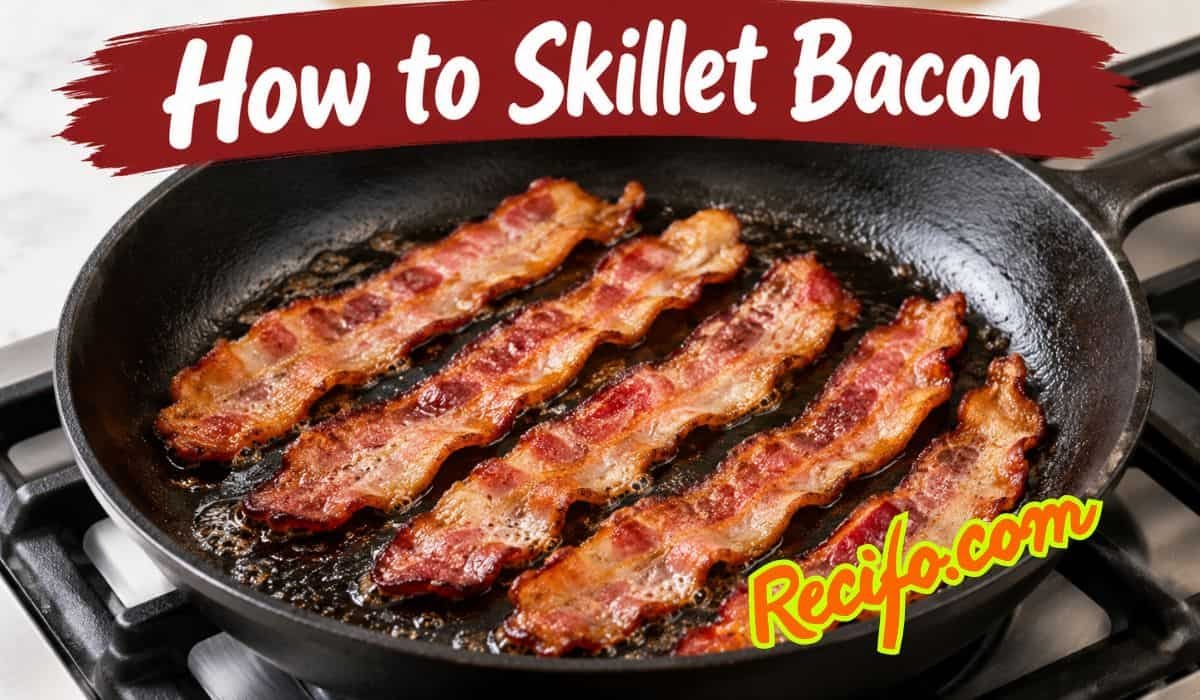

Skillet bacon turns out best when you lay 4 to 6 cold strips into a cold pan over medium-low heat for 10 to 12 minutes. This method renders the fat slowly so the meat turns crisp instead of tough. It suits anyone cooking breakfast for one or two people who wants flat, evenly browned strips without turning on an oven.
Table of Contents
Equipment and ingredients to skillet your bacon
- A 10-inch or 12-inch heavy skillet, ideally cast iron or heavy stainless steel; thin non-stick pans heat too fast and scorch the meat.
- 4 to 6 strips of raw, cured pork bacon (standard thickness works best).
- Metal cooking tongs to turn the meat without tearing it.
- A wide plate lined with 2 sheets of standard paper towels.
- A glass jar or metal tin to catch the hot grease.
A flat griddle works well in place of a skillet, but a small saucepot doesn’t because crowded meat steams instead of browning.
Step-by-step
- Arrange 4 to 6 cold bacon strips flat across the bottom of a cold 12-inch skillet before you touch the burner dial. Tip: If you let the strips overlap slightly, they’ll shrink apart as the fat renders out, so don’t stress about crowding them on the first layout.
- Turn the burner dial to medium-low heat to start the rendering process slowly.
- Cook the strips undisturbed for 5 to 6 minutes until liquid grease pools across the metal and the strips loosen themselves from the pan bottom.
- Flip every strip over with metal tongs once the underside turns a light golden shade. Careful: Tossing cold bacon into a hot pan costs you crispness because the edges burn while the white fat stays rubbery and raw.
- Fry the second side for another 4 to 5 minutes, turning the heat down to low if the fat begins to smoke.
- Transfer the strips with your tongs to the paper towel plate to drain for 60 seconds before eating. Tip: If you want chewy meat, pull the strips at 9 total minutes; if you want shatter-crisp strips, leave them for 12 minutes.
- Switch the burner knob completely off as soon as the last strip leaves the pan.
Handling large amounts of boiling oil carries a burn risk, so ask someone else to assist if you have motor control limits or shaky hands.
Cooking times for different cuts
A pan handles different cuts at different speeds depending on the thickness of the meat.
| Cut Style | Average Cook Time | Heat Adjustment | Visual Signal |
|---|---|---|---|
| Standard cut | 10 to 12 minutes | Medium-low throughout | Tiny, steady white bubbles |
| Thick-cut | 14 to 16 minutes | Low heat after minute 5 | Fat turns translucent before browning |
| Center-cut | 8 to 10 minutes | Medium-low throughout | Edges ruffle quickly |
| Turkey bacon | 6 to 8 minutes | Medium with 1 tsp added oil | Surface looks matte, not glossy |
This assumes standard kitchen burner output; for high-output commercial gas burners, cut the dial lower. It’s safer to start on low and add heat than to scorch your batch on the first run.
Are Lodge Cast Iron Skillets Good Quality
How to tell you did it right?
A well-cooked piece shows deep amber color across both the lean meat and the fat ribbon, with a rigid body that snaps gently when bent. Poorly cooked meat looks pale in the center with blackened, bitter tips, or stays limp and soggy on the plate. Bacon curls when the lean muscle contracts faster than the tough fat strip can shrink. You stop this warping by starting the pan dead cold, pressing the strips flat during the initial warmup, and keeping the flame low enough that the fat softens gradually.
Handling grease and clean-up
The United States Department of Agriculture (USDA) notes that cooked bacon holds safely in a refrigerator below 40°F for 4 to 5 days. Once the stove cools, pour the warm liquid fat directly through a small strainer into a clean glass jar. Never pour animal grease down a sink drain because it hardens inside plumbing and blocks sewer pipes. Wipe the cooled skillet clean using dry paper towels before running warm water over cast iron. Cooked strips can be reheated on a warm plate whenever you need them throughout the week.
Other ways to do it
Oven sheet pan
Lay 12 to 16 strips flat across a parchment-lined baking sheet and slide it into a cold oven set to 400°F for 18 to 20 minutes. This method trades stove watching for hands-off time and feeds a large family all at once.
Countertop air fryer
Cook 4 strips at 350°F in a single basket layer for 7 to 9 minutes. The intense air circulation drains oil rapidly, making it fast for single servings, though cleanup takes longer due to the small, greasy basket grates.
Microwave plate
Sandwich 3 strips between 4 sheets of paper towels on a microwave-safe plate and run on high power for 3 minutes. It cuts cooking time down to almost nothing, but you sacrifice the rich flavor that pan-rendered fat creates.
How Do You Make 30-Minute Panko-Crusted Pork Chops
Frequently asked questions
Can you fry bacon without cooking oil?
Yes, you don’t need any oil or butter because bacon releases plenty of its own fat as it warms. Adding oil only makes the final strips greasy and increases dangerous splattering on your stovetop.
Why does bacon splatter so much in a pan?
Water trapped inside the meat turns to steam under high heat and bursts violently through the hot fat layer. You can cut down splatters by cooking cured strips over gentle, low heat instead of high heat.
Is it safe to save bacon grease for other meals?
Yes, rendered fat keeps well in a sealed jar inside the refrigerator for up to 6 months. Make sure you strain out the dark meat bits first, since leftover protein specks cause stored fat to spoil quickly.
What happens if you start bacon in a hot pan?
The exterior meat burns before the thick white fat strips have time to melt down. This leaves you with charred edges and a chewy, soggy center rather than an even, brittle crunch throughout the slice.
Who this method isn’t for?
This isn’t for anyone needing to feed more than three people at once. A standard skillet holds too few strips per batch, forcing you to cook in slow waves while the first servings turn cold.
Leave a Reply