


Fresh fruit, bright flavors, and creamy textures make tropical smoothies one of the easiest ways to enjoy a refreshing and nutritious drink at home. Whether you’re looking for a quick breakfast, a post-workout recovery drink, or a healthy afternoon treat, tropical smoothies deliver a delicious combination of vitamins, minerals, fiber, and natural sweetness.
What makes these smoothies stand out is their ability to transport your taste buds straight to a beachside paradise. The combination of mangoes, pineapples, bananas, coconut, and citrus creates a flavor profile that feels indulgent while still being packed with wholesome ingredients.
In this guide, you’ll learn what makes a smoothie truly tropical, the best ingredients to use, expert blending tips, and two delicious tropical smoothie recipes that are easy to make and incredibly satisfying.
Table of Contents
What Makes a Smoothie Truly Tropical?
A tropical smoothie isn’t simply a fruit smoothie. It combines fruits and flavors commonly associated with tropical climates, creating a refreshing and vibrant taste.
Essential Tropical Fruits
These fruits form the foundation of most tropical smoothie recipes:
- Mango
- Pineapple
- Banana
- Papaya
- Passion Fruit
- Guava
- Coconut
Each fruit contributes unique flavors and nutritional benefits.
| Tropical Fruit | Flavor Profile | Key Nutrients |
|---|---|---|
| Mango | Sweet and juicy | Vitamin A, Vitamin C |
| Pineapple | Tangy and refreshing | Vitamin C, Manganese |
| Banana | Creamy and mild | Potassium, Vitamin B6 |
| Papaya | Sweet and mellow | Vitamin C, Folate |
| Passion Fruit | Tart and aromatic | Fiber, Antioxidants |
| Coconut | Rich and creamy | Healthy fats |
The Best Liquid Bases
The liquid base determines texture and consistency.
Popular choices include:
- Coconut water
- Coconut milk
- Almond milk
- Oat milk
- Greek yogurt
- Regular milk
Coconut water provides hydration, while coconut milk creates a richer and creamier smoothie.
Optional Flavor Boosters
Small additions can dramatically enhance the flavor.
Popular smoothie boosters include:
- Fresh lime juice
- Ginger
- Chia seeds
- Flaxseeds
- Honey
- Maple syrup
- Vanilla extract
- Mint leaves
Why Tropical Smoothies Are So Popular?
Tropical smoothies continue to grow in popularity because they offer a balance between taste and nutrition.
They Are Nutrient-Dense
Tropical fruits are naturally packed with essential vitamins and minerals.
For example:
- Mangoes contain over 60% of the daily recommended intake of Vitamin C per serving.
- Pineapples contain bromelain, a digestive enzyme that may help support digestion.
- Bananas are rich in potassium, which supports muscle and nerve function.
They Help Increase Fruit Intake
Many people struggle to consume enough fruit throughout the day.
A single smoothie can contain:
- Two to three servings of fruit
- Dietary fiber
- Antioxidants
- Hydrating ingredients
They Are Extremely Versatile
You can customize tropical smoothies according to:
- Dietary preferences
- Calorie goals
- Protein requirements
- Taste preferences
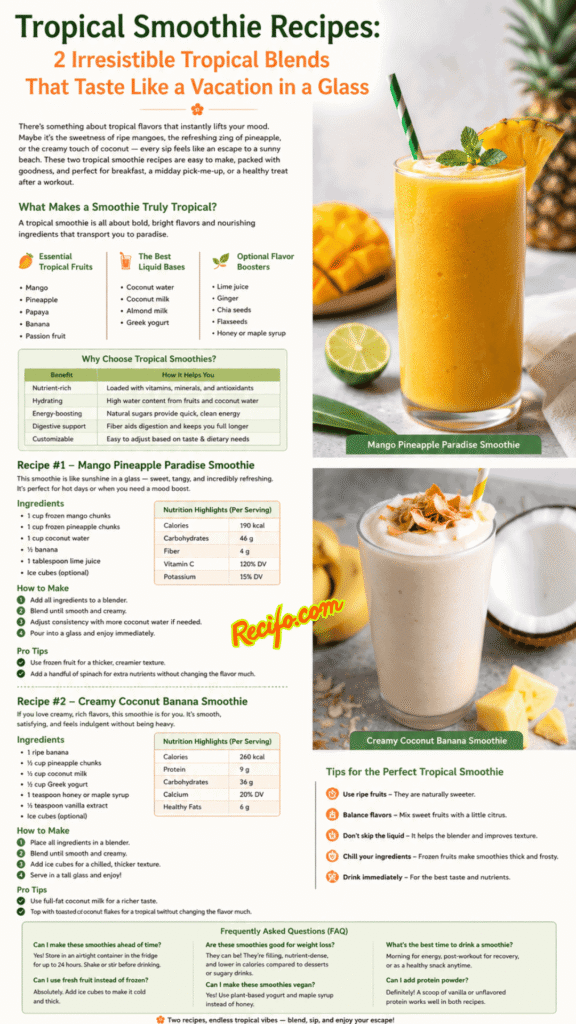
Tropical Smoothie Recipe #1 – Mango Pineapple Paradise Smoothie
This smoothie tastes like sunshine in a glass. The sweetness of mango pairs perfectly with the tangy brightness of pineapple, creating a refreshing drink that’s perfect any time of day.
Why You’ll Love It
- Naturally sweet
- Dairy-free
- Hydrating
- High in Vitamin C
- Ready in under 5 minutes
Ingredients
- 1 cup frozen mango chunks
- 1 cup frozen pineapple chunks
- 1 cup coconut water
- ½ ripe banana
- 1 tablespoon fresh lime juice
- Ice cubes (optional)
Step-by-Step Instructions
- Add coconut water to the blender first.
- Add mango, pineapple, and banana.
- Pour in lime juice.
- Blend on high speed until smooth.
- Add ice if desired and blend again.
- Pour into a chilled glass and serve immediately.
Nutrition Highlights
| Nutrient | Approximate Amount |
|---|---|
| Calories | 190 |
| Carbohydrates | 46g |
| Fiber | 4g |
| Vitamin C | 120% DV |
| Potassium | 15% DV |
What Makes This Recipe Special?
Mango provides a silky texture while pineapple adds a refreshing tropical acidity. The coconut water keeps the smoothie light rather than heavy.
The splash of lime juice brightens every flavor and prevents the smoothie from tasting overly sweet.
Variations
Try these simple upgrades:
Protein Version
Add:
- 1 scoop vanilla protein powder
- ½ cup Greek yogurt
Green Tropical Version
Add:
- 1 cup spinach
- ½ avocado
Tropical Citrus Version
Add:
- Orange juice instead of coconut water
- Extra lime zest
Tropical Smoothie Recipe #2 – Creamy Coconut Banana Smoothie
If you enjoy rich and creamy smoothies, this recipe delivers an indulgent texture without feeling overly heavy.
The combination of coconut and banana creates a naturally sweet, dessert-like smoothie that still contains plenty of nutritional benefits.
Why You’ll Love It
- Thick and creamy
- Naturally sweet
- Filling and satisfying
- Great for breakfast
- Kid-friendly
Ingredients
- 1 ripe banana
- ½ cup frozen pineapple chunks
- ½ cup coconut milk
- ½ cup Greek yogurt
- 1 teaspoon honey or maple syrup
- ½ teaspoon vanilla extract
- Ice cubes (optional)
Step-by-Step Instructions
- Add coconut milk to your blender.
- Add banana and pineapple.
- Add yogurt, vanilla extract, and honey.
- Blend until completely smooth.
- Add ice if desired.
- Blend again until thick and creamy.
Nutrition Highlights
| Nutrient | Approximate Amount |
|---|---|
| Calories | 260 |
| Protein | 9g |
| Carbohydrates | 36g |
| Healthy Fats | 6g |
| Calcium | 20% DV |
What Makes This Recipe Special?
Bananas naturally thicken smoothies while adding sweetness.
Greek yogurt contributes:
- Protein
- Calcium
- Creaminess
Meanwhile, coconut milk provides the tropical flavor that makes this recipe unforgettable.
Variations
Extra Tropical Version
Add:
- Mango chunks
- Passion fruit pulp
High-Protein Version
Add:
- Vanilla protein powder
- Cottage cheese
Dairy-Free Version
Replace Greek yogurt with:
- Coconut yogurt
- Almond yogurt
Common Tropical Smoothie Ingredients and Their Benefits
Choosing quality ingredients can improve both flavor and nutrition.
| Ingredient | Main Benefit |
|---|---|
| Mango | High in antioxidants |
| Pineapple | Supports digestion |
| Banana | Potassium-rich |
| Coconut Water | Natural hydration |
| Greek Yogurt | Protein source |
| Chia Seeds | Fiber and omega-3 fats |
| Lime Juice | Bright flavor and Vitamin C |
| Ginger | Adds warmth and spice |
Tips for Making the Perfect Tropical Smoothie
Even simple smoothies can be improved with a few professional techniques.
Use Frozen Fruit
Frozen fruit creates:
- Better texture
- Colder smoothies
- Less need for ice
This prevents the drink from becoming watered down.
Balance Sweet and Tart Flavors
A good tropical smoothie combines:
- Sweet fruits
- Acidic fruits
- Creamy ingredients
This creates depth and complexity.
Don’t Overload the Blender
Adding too many ingredients can produce uneven blending.
For best results:
- Add liquid first
- Add soft ingredients second
- Add frozen ingredients last
Chill Ingredients Before Blending
Cold ingredients create a thicker and more refreshing smoothie.
Drink Immediately
Fresh smoothies taste best right after blending because nutrients and flavors are at their peak.
How to Customize Tropical Smoothies for Different Goals?
For Weight Management
Focus on:
- Lower-calorie fruits
- Unsweetened liquids
- Higher fiber content
Good additions include:
- Spinach
- Chia seeds
- Flaxseeds
For Muscle Recovery
Add:
- Protein powder
- Greek yogurt
- Cottage cheese
For Extra Energy
Add:
- Oats
- Banana
- Honey
For Digestive Support
Include:
- Pineapple
- Papaya
- Ginger
These ingredients may support healthy digestion.
Tropical Smoothie Mistakes to Avoid
Using Too Much Sweetener
Many tropical fruits are already naturally sweet.
Taste before adding:
- Honey
- Maple syrup
- Sugar
Adding Too Much Liquid
Excess liquid creates a thin smoothie.
Start with less and gradually increase.
Ignoring Texture
Texture matters just as much as flavor.
A good smoothie should be:
- Smooth
- Thick
- Easy to drink
Using Unripe Fruit
Ripe fruit provides:
- Better flavor
- Better sweetness
- Better texture
Frequently Asked Questions (FAQ)
Can I Make Tropical Smoothies Ahead of Time?
Yes.
Store smoothies in an airtight container in the refrigerator for up to 24 hours. Shake well before drinking.
Can I Use Fresh Fruit Instead of Frozen?
Absolutely.
Fresh fruit works well, but you’ll likely need ice to achieve the same cold and thick consistency.
Are Tropical Smoothies Healthy?
Yes, when made with whole-food ingredients.
They can provide:
- Vitamins
- Minerals
- Fiber
- Hydration
Avoid excessive sweeteners for the healthiest option.
Can Tropical Smoothies Help With Weight Loss?
They can fit into a balanced diet because they are nutrient-dense and satisfying. Portion control still matters.
Can I Add Protein Powder?
Definitely.
Vanilla protein powder works particularly well with tropical fruit flavors.
Are These Smoothies Vegan?
The Mango Pineapple Paradise Smoothie is naturally vegan.
For the Creamy Coconut Banana Smoothie, simply replace Greek yogurt with a plant-based yogurt and use maple syrup instead of honey.
What Is the Best Time to Drink a Tropical Smoothie?
Popular times include:
- Breakfast
- Post-workout
- Afternoon snack
- Healthy dessert alternative
How Can I Make My Smoothie Thicker?
Try adding:
- Frozen fruit
- Greek yogurt
- Banana
- Chia seeds
Final Thoughts
Tropical smoothies combine vibrant flavors, natural sweetness, and impressive nutritional value in one convenient drink. With ingredients like mango, pineapple, banana, coconut, and lime, it’s easy to create refreshing blends that taste indulgent while supporting a healthy lifestyle.
Whether you choose the bright and fruity Mango Pineapple Paradise Smoothie or the rich and satisfying Creamy Coconut Banana Smoothie, both recipes offer a simple way to bring tropical flavors into your daily routine. Keep frozen fruit on hand, experiment with your favorite add-ins, and enjoy a homemade smoothie that feels like a mini vacation with every sip.
Leave a Reply