
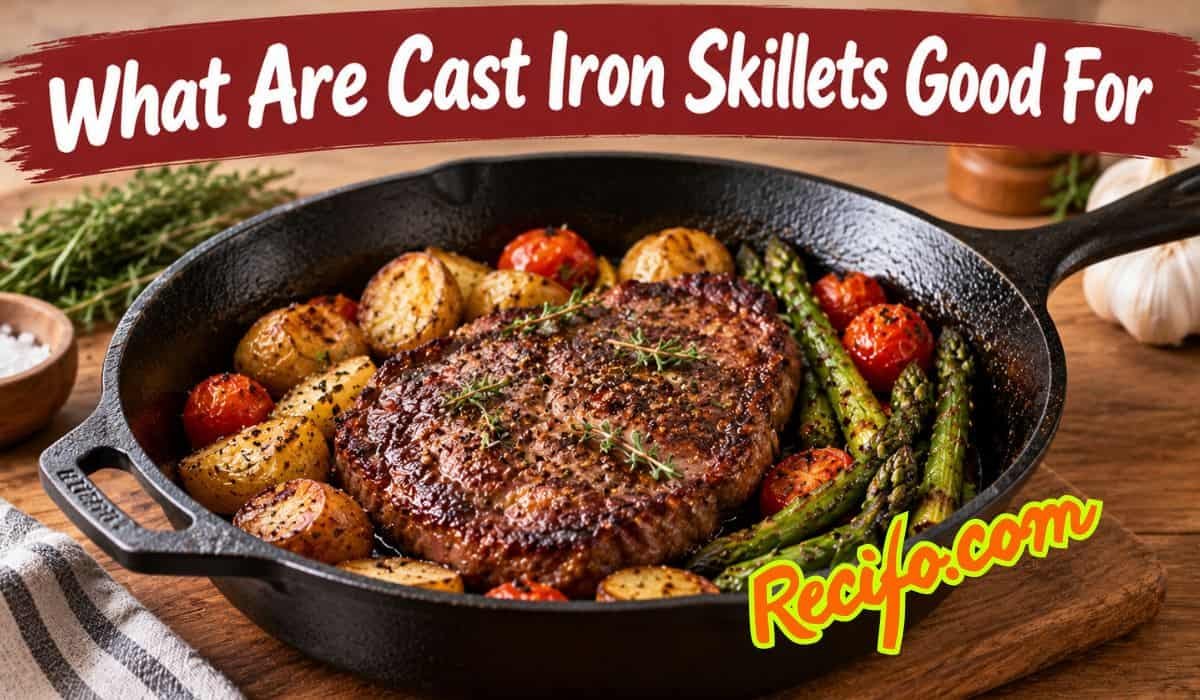

Searing steaks, baking cornbread, and frying foods at steady high heat are what cast iron skillets are good for, because dense metal holds thermal energy longer than thin aluminum. A standard 10-inch skillet moves easily from a 450°F stovetop burn straight into a hot oven without damaging the pan.
Cast iron works because its thick walls act like a heat battery. It heats slowly and unevenly across the bottom, but once hot, food drops into the pan without dropping the cooking temperature.
The most common error before starting is placing cold food into a cold skillet. If the metal hasn’t absorbed enough heat before you add fat, proteins bond to the raw iron pores and tear when flipped.
Table of Contents
Cooking with cast iron pans
-
Place your dry skillet on a burner over medium heat for 5 minutes before adding any ingredients. This slow warm-up spreads the heat evenly across the base and prevents thermal shock to the iron. Tip: Never rush preheating with maximum flame, or you’ll create one scorching hot spot directly over the burner.
-
Add 1 tablespoon of high-smoke-point oil, like canola or avocado oil, swirling it to coat the bottom. Wait 30 seconds until the oil shimmers before adding food.
-
Lay your food flat into the hot oil, leaving at least 1 inch of space between pieces so steam can escape.
-
Leave the food untouched for 3 to 4 minutes so a hard crust forms against the metal surface. Tip: If the meat resists when lifted with a spatula, let it cook for another minute until it releases naturally.
Transfer the skillet directly into a 400°F oven using a thick silicone mitt if your recipe calls for finishing thick cuts with gentle ambient heat.
-
Wash the warm pan using 1 cup of hot water and a stiff nylon brush right after serving. Dry it immediately with a clean towel, then wipe 1/4 teaspoon of oil across the warm surface before storing.
Are Ceramic Skillets Good for Frying
How long it takes?
Preheating times depend entirely on the burner type and the thickness of the metal base.
| Situation | How long | What changes it | What to watch for |
|---|---|---|---|
| Preheating 10-inch pan dry | 5 to 7 minutes | Gas flame versus flat glass stovetop | Light wisps of smoke rising from bare metal |
| Searing a 1-inch strip steak | 6 to 8 minutes total | Starting meat temperature from the fridge | Dark mahogany crust lifting free from the pan |
| Baking standard skillet cornbread | 20 to 25 minutes | Oven rack position and batter sugar content | Edges pulling away from pan sides |
| Reheating pan for oil storage | 2 to 3 minutes | Residual heat left after rinsing | Surface looking matte and dry to the touch |
If your pan takes longer than 10 minutes to brown meat, your burner output is too low for the pan’s thickness.
How to tell when it’s done?
A well-seared crust shows a deep mahogany brown color, not light gray or blackened ash. You’ll hear an aggressive, steady sizzle that softens into a quiet crackle as surface moisture cooks away. If a spatula meets resistance when sliding underneath, the sear isn’t finished yet. The food releases itself completely once the crust dries out. For food safety, don’t guess internal readiness by the exterior sear; check that cuts reach safe internal temperatures according to USDA guidelines using a meat probe thermometer.
Mistakes that ruin it
- Soaking the pan in water: Water seeps into exposed iron pores and forms orange rust within an hour. Wash the pan quickly, rinse it, and dry it thoroughly over low stove heat instead of leaving it in the sink.
- Cooking acidic liquids for hours: Simmering wine or tomato sauce degrades the hardened oil layers and gives food an off-putting metallic flavor. Use an enameled cast iron or stainless steel pot for tomato sauces, saving bare iron for quick sears.
- Adding food to cold iron: Cold meat sticks firmly to cold metal and tears apart when moved. Always heat the dry skillet over medium flame for several minutes before grease or ingredients touch the pan.
Frequently asked questions
Can you use dish soap on cast iron?
Yes, mild dish soap won’t strip factory seasoning because cured oil forms a polymerized plastic-like layer bonded directly to the iron. Avoid harsh lye soaps or abrasive steel wool pads. Use a soft sponge with warm water to remove grease, then dry the skillet completely on the stovetop.
Why does food stick to my skillet?
Food sticks when the pan isn’t heated long enough before adding fat, or when meat gets moved too soon. If you want a non-stick release, preheat over medium heat for 5 minutes; if you need delicate eggs cooked without fat, use non-stick Teflon cookware instead.
Can you cook acidic foods like tomatoes in it?
Yes, but only for short cooking tasks under 15 minutes. Quick pan sauces won’t damage seasoned metal, but long-simmering marinara leaches iron into your meal. This trade-off between heat retention and chemical reactivity means enameled pans handle acidic braises much better than bare black iron does.
Who is cast iron cookware not suitable for?
This cookware isn’t for people with weak wrists or arthritis because an average 12-inch skillet weighs around 8 pounds empty. It’s also bad for people who prefer dishwasher-safe gear, since automatic dishwashers wash away seasoning oils and cause thick surface rust across the entire pan within one cycle.
What happens if rust forms on the surface?
Rust sits on the surface without ruining the underlying metal frame. Scrub the orange spots away using a steel wool pad with warm water, dry the iron over a low burner, and rub a drop of vegetable oil over the raw patch to reseal the pan against moisture.
Can cast iron go under an oven broiler?
Yes, untreated iron easily withstands high oven temperatures exceeding 500°F. However, maximum heat tolerances vary by model and handle build—check the label or manufacturer stamp before exposing specialty handles or glass lid covers to high-heat broiler coils.
Leave a Reply