

A tough workout puts your body under stress. Muscles use stored energy, lose fluids, and develop tiny tears that need repair. What you eat after exercise plays a major role in how quickly you recover and how well your body adapts to training.
While many people focus on protein shakes, a well-made post-workout smoothie offers much more. It combines protein, carbohydrates, healthy fats, vitamins, minerals, and hydration in one convenient drink. Better yet, it can be prepared in minutes and customized to suit your fitness goals.
Whether you’re trying to gain muscle, improve athletic performance, lose fat, or simply recover faster, the right smoothie can help support your efforts.
In this guide, you’ll learn what makes an effective recovery smoothie, the best ingredients to use, and two easy recipes you can make at home.
Table of Contents
Why a Post-Workout Smoothie Is Worth Having After Exercise
Exercise creates a demand for nutrients. During training, your body burns stored glycogen, loses water through sweat, and places stress on muscle fibers.
A post-workout smoothie helps replenish what was used during exercise while providing nutrients needed for recovery.
What Happens to Your Body After a Workout
Following physical activity, your body enters a recovery phase. During this period:
- Muscle tissue begins repairing itself
- Glycogen stores need replenishment
- Electrolyte levels may be reduced
- Protein synthesis increases
- Recovery processes become a priority
This is why nutrition after training is often discussed alongside exercise itself.
The Importance of Refueling Muscles
Without proper nutrition, recovery may take longer. Consistently under-fueling after workouts can contribute to:
- Increased fatigue
- Reduced performance
- Slower muscle growth
- Longer recovery periods
- Difficulty maintaining training intensity
How Smoothies Make Recovery Easier
Smoothies offer several advantages:
| Benefit | Why It Matters |
|---|---|
| Quick digestion | Nutrients become available faster |
| Portable | Easy to consume on the go |
| Convenient | Takes minutes to prepare |
| Customizable | Suitable for different goals |
| Hydrating | Helps replace fluids lost during exercise |
Benefits of Drinking a Smoothie Instead of Skipping a Meal
Many people finish a workout and delay eating for hours. While occasional delays aren’t disastrous, consistently skipping recovery nutrition may affect performance over time.
A smoothie provides:
- Protein for repair
- Carbohydrates for energy restoration
- Hydration support
- Essential micronutrients
What Makes a Great Post-Workout Smoothie?
Not all smoothies are created equal. A recovery smoothie should contain a balance of key nutrients.
Protein for Muscle Repair and Growth
Protein supplies amino acids, which are the building blocks of muscle tissue.
Good sources include:
- Whey protein
- Greek yogurt
- Cottage cheese
- Milk
- Plant-based protein powders
Many active individuals aim for approximately 20–40 grams of protein after training.
Carbohydrates for Glycogen Replenishment
Carbohydrates help restore glycogen, the body’s stored form of energy.
Examples include:
- Bananas
- Oats
- Berries
- Mango
- Pineapple
- Dates
Carbohydrates become especially important after intense or long-duration workouts.
Healthy Fats for Sustained Energy
Although fats digest more slowly, they contribute to overall nutrition and satiety.
Popular smoothie additions include:
- Peanut butter
- Almond butter
- Chia seeds
- Flaxseeds
- Avocado
Fluids and Electrolytes for Rehydration
Hydration is often overlooked.
Smoothie liquids can include:
- Water
- Milk
- Coconut water
- Almond milk
- Oat milk
Vitamins and Minerals That Support Recovery
Whole-food ingredients naturally provide nutrients that support general health.
Key nutrients commonly found in smoothie ingredients include:
- Potassium
- Magnesium
- Calcium
- Vitamin C
- Vitamin E
- B vitamins
The Best Ingredients to Include in a Post-Workout Smoothie
Choosing quality ingredients can make a significant difference in nutritional value.
Protein Sources
Greek Yogurt
- High protein content
- Creamy texture
- Contains calcium
Whey Protein
- Rapid digestion
- Rich in essential amino acids
- Convenient option
Plant-Based Protein
Popular options include:
- Pea protein
- Soy protein
- Brown rice protein
Milk
Milk naturally contains:
- Protein
- Carbohydrates
- Calcium
- Potassium
Healthy Carbohydrate Sources
Bananas
Benefits include:
- Potassium content
- Natural sweetness
- Easily digestible carbohydrates
Oats
Oats provide:
- Complex carbohydrates
- Fiber
- Long-lasting energy
Berries
Popular choices:
- Blueberries
- Strawberries
- Raspberries
- Blackberries
They also contribute antioxidants.
Healthy Fat Sources
Nut Butters
Nut butters provide:
- Healthy fats
- Protein
- Rich flavor
Chia Seeds
Benefits include:
- Fiber
- Omega-3 fatty acids
- Texture enhancement
Avocado
Avocado adds:
- Creaminess
- Potassium
- Healthy fats
Recovery-Boosting Add-Ins
Consider adding:
- Spinach
- Kale
- Ginger
- Cinnamon
- Cocoa powder
- Turmeric
These ingredients increase nutritional variety without drastically affecting taste.
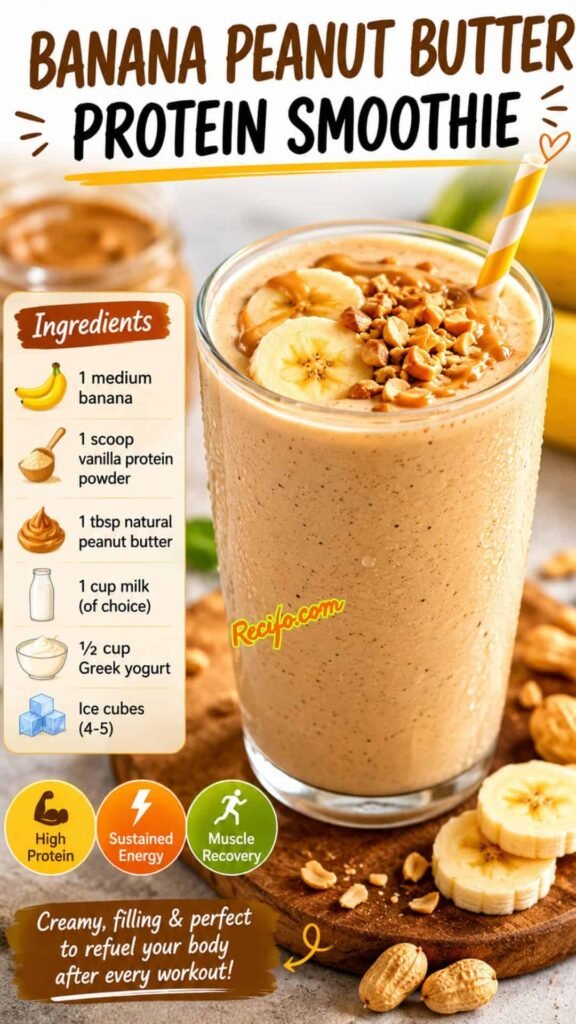
Recipe #1 – Banana Peanut Butter Protein Recovery Smoothie
This classic combination remains popular for good reason. It provides a balanced mix of protein, carbohydrates, and healthy fats.
Why This Smoothie Works
Benefits include:
- Supports muscle recovery
- Provides sustained energy
- Helps increase protein intake
- Keeps hunger under control
Ingredients
- 1 medium banana
- 1 scoop vanilla protein powder
- 1 tablespoon natural peanut butter
- 1 cup milk of choice
- ½ cup Greek yogurt
- 4–5 ice cubes
Step-by-Step Instructions
- Add milk to the blender.
- Add banana and Greek yogurt.
- Add protein powder.
- Add peanut butter.
- Add ice cubes.
- Blend until smooth.
- Serve immediately.
Nutritional Highlights
| Nutrient | Approximate Amount |
|---|---|
| Calories | 400–500 |
| Protein | 30–40g |
| Carbohydrates | 35–45g |
| Fat | 10–15g |
Values vary based on ingredients used.
Tips for Customizing This Recipe
For muscle gain:
- Add oats
- Increase peanut butter
- Add an extra banana
For fat loss:
- Use lower-fat yogurt
- Reduce peanut butter
- Choose unsweetened milk
For extra nutrients:
- Add spinach
- Add chia seeds
- Add cinnamon
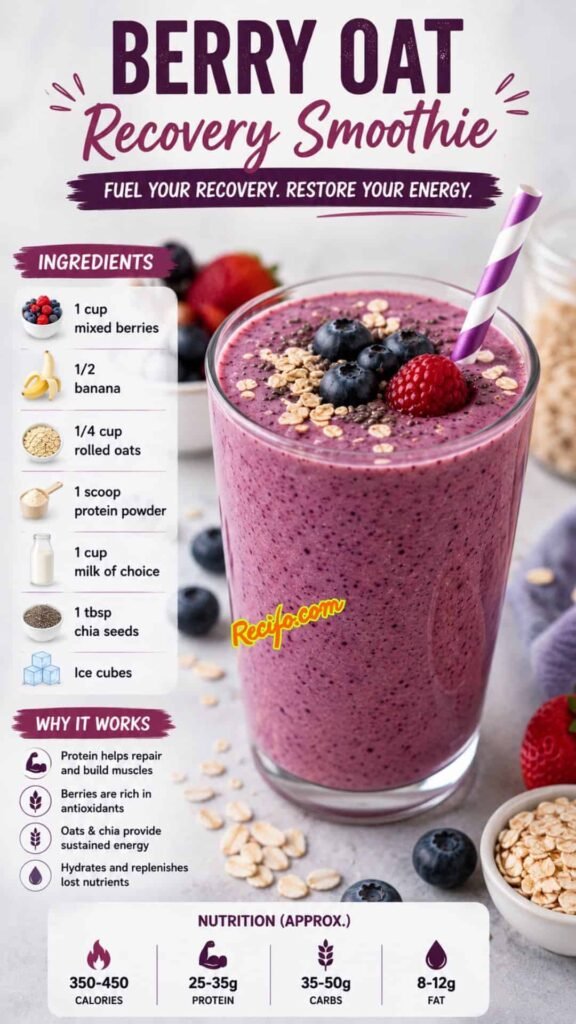
Recipe #2 – Berry Oat Recovery Smoothie
This smoothie combines fruit, protein, and complex carbohydrates in one refreshing drink.
Why This Smoothie Works
The combination offers:
- Antioxidants from berries
- Protein for recovery
- Fiber for fullness
- Long-lasting energy
Ingredients
- 1 cup mixed berries
- ½ banana
- ¼ cup rolled oats
- 1 scoop protein powder
- 1 cup milk of choice
- 1 tablespoon chia seeds
- Ice cubes
Step-by-Step Instructions
- Add milk to the blender.
- Add berries and banana.
- Add oats and chia seeds.
- Add protein powder.
- Add ice cubes.
- Blend until creamy.
- Serve immediately.
Nutritional Highlights
| Nutrient | Approximate Amount |
|---|---|
| Calories | 350–450 |
| Protein | 25–35g |
| Carbohydrates | 35–50g |
| Fat | 8–12g |
Tips for Customizing This Recipe
For higher calories:
- Add nut butter
- Increase oats
- Add Greek yogurt
For lower calories:
- Reduce oats
- Use water or low-calorie milk
For more micronutrients:
- Add spinach
- Add kale
- Add flaxseed
Common Post-Workout Smoothie Mistakes to Avoid
Even healthy smoothies can become less effective when certain mistakes are made.
Not Including Enough Protein
A fruit-only smoothie may taste great but often lacks enough protein to support recovery.
Loading Up on Sugar
Too many sweeteners can significantly increase calorie intake.
Limit:
- Excess honey
- Sweetened yogurt
- Sugary syrups
Forgetting Hydration
Recovery isn’t just about food.
Remember to:
- Drink water
- Replace lost fluids
- Consider electrolyte-rich ingredients
Making Smoothies Too Low in Calories
Some people unintentionally create smoothies that contain less nutrition than their workout requires.
Relying Solely on Smoothies
Smoothies are useful, but whole foods should remain part of a balanced diet.
When Should You Drink a Post-Workout Smoothie?
Timing matters less than consistency, but consuming nutrients relatively soon after exercise can be helpful.
The Ideal Recovery Window
Many athletes aim to consume protein and carbohydrates within one to two hours after training.
Morning Workout Recovery
A smoothie can serve as:
- Breakfast
- Recovery meal
- Convenient option before work
Evening Workout Recovery
For evening exercisers, a smoothie may:
- Support overnight recovery
- Provide protein before sleep
- Prevent excessive hunger
Does Timing Really Matter?
Current evidence suggests total daily protein intake is often more important than hitting a precise minute-by-minute window.
Consistency beats perfection.
How to Adjust Your Smoothie Based on Your Fitness Goals?
Different goals require different nutritional approaches.
For Muscle Gain
Focus on:
- Higher calories
- More protein
- Additional carbohydrates
Add:
- Oats
- Nut butters
- Extra fruit
For Fat Loss
Focus on:
- Protein
- Moderate calories
- High satiety ingredients
Use:
- Greek yogurt
- Berries
- Spinach
For Endurance Athletes
Prioritize:
- Carbohydrates
- Hydration
- Electrolytes
Consider:
- Bananas
- Coconut water
- Oats
For General Fitness
Maintain balance:
- Protein
- Fruit
- Healthy fats
- Hydration
Meal Prep Tips for Post-Workout Smoothies
Preparation can save time during busy weeks.
Prepare Smoothie Packs Ahead of Time
Store pre-portioned ingredients in freezer bags.
Include:
- Fruit
- Vegetables
- Oats
Simply add liquid and blend.
Store Ingredients Properly
Frozen fruit often lasts longer and reduces waste.
Freeze Fruits for Better Texture
Frozen ingredients create a thicker smoothie without requiring large amounts of ice.
Save Time With Pre-Measured Portions
Pre-portion:
- Protein powder
- Seeds
- Oats
This makes post-workout preparation nearly effortless.
Frequently Asked Questions
Is a Smoothie Better Than a Protein Shake After a Workout?
A smoothie often contains additional nutrients such as carbohydrates, vitamins, minerals, and healthy fats, making it more complete than a basic protein shake.
How Much Protein Should a Post-Workout Smoothie Contain?
Most active adults benefit from approximately 20–40 grams of protein after exercise.
Can I Drink a Post-Workout Smoothie for Weight Loss?
Yes. Focus on protein-rich ingredients while controlling total calories.
Should I Add Protein Powder to Every Smoothie?
Not necessarily. Greek yogurt, milk, and cottage cheese can also contribute protein.
Are Bananas Good After a Workout?
Yes. Bananas provide carbohydrates and potassium, making them a popular recovery ingredient.
Can I Make a Post-Workout Smoothie Without Dairy?
Absolutely.
Dairy-free options include:
- Almond milk
- Soy milk
- Oat milk
- Plant-based protein powder
What Is the Best Fruit for Muscle Recovery?
There is no single best fruit, but bananas, berries, pineapple, and mango are commonly used due to their nutritional profiles.
Can a Smoothie Replace a Post-Workout Meal?
In many cases, yes—provided it contains adequate protein, carbohydrates, and calories.
How Long Can a Smoothie Stay Fresh?
Most smoothies are best consumed immediately but can typically be stored in the refrigerator for up to 24 hours.
Is It Okay to Drink a Post-Workout Smoothie Every Day?
Yes. Daily smoothies can be part of a healthy eating pattern when made with balanced ingredients.
Final Thoughts
Recovery nutrition doesn’t have to be complicated. A simple smoothie made with quality ingredients can help replenish energy, support muscle repair, and make it easier to meet your daily nutrition goals.
The Banana Peanut Butter Protein Recovery Smoothie is ideal for those looking for a filling, protein-rich option, while the Berry Oat Recovery Smoothie offers a refreshing combination of antioxidants, fiber, and sustained energy.
The best post-workout smoothie is the one you’ll consistently prepare and enjoy. Focus on including protein, carbohydrates, hydration, and nutrient-dense ingredients, and you’ll have a recovery drink that supports your training without requiring expensive supplements or complicated recipes.
Leave a Reply